Can You Coat A Rusted Metal Roof?
Usually, yes. Surface rust and light pitting get wire brushed, washed, and primed before any coating goes on. Panels rusted through at the eaves or end laps get cut out and replaced first, then coated with the rest.

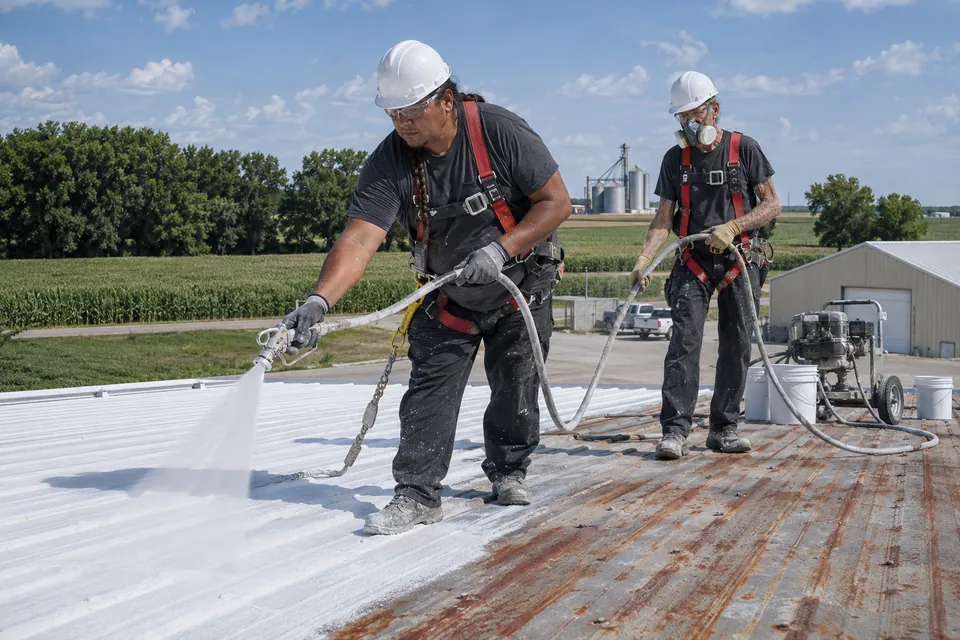
As a Columbus metal roof coating contractor, we seal seams, fasteners, and rusted panels on commercial and farm buildings, then coat the whole roof in place.
Most Columbus metal roof coating jobs start with one of these six conditions. Each one shows up on the panels, the laps, or the ceiling below.
Usually, yes. Surface rust and light pitting get wire brushed, washed, and primed before any coating goes on. Panels rusted through at the eaves or end laps get cut out and replaced first, then coated with the rest.
Panel screws loosen as steel swells in summer and shrinks in winter. A cracked washer lets water run down the shank and drip inside, often far from where the stain shows on the ceiling.
Laps open when old sealant dries out or panels shift. Water running along a lap can travel several feet before it finds a gap, so we trace each wet line back to its seam.
Stains on ceiling tile or wet spots on stored product show where water lands. The entry point usually sits uphill, so we walk the roof above each stain and check the screws, laps, and curbs.
Every opening in a metal roof is a joint between two materials. Pipe boots crack, curb flashing pulls loose, and skylight panels yellow and split. Each one gets resealed or replaced before the coating crosses it.
Grain dust, leaves, and silt pack the gutters on long metal buildings. Water backs up under the eave trim, and the lowest panel ends rust first. Cleaning and repairing the eave comes before coating.
Five coating systems, each matched to a roof type. Every card shows what that system fits and the work we do in each season.
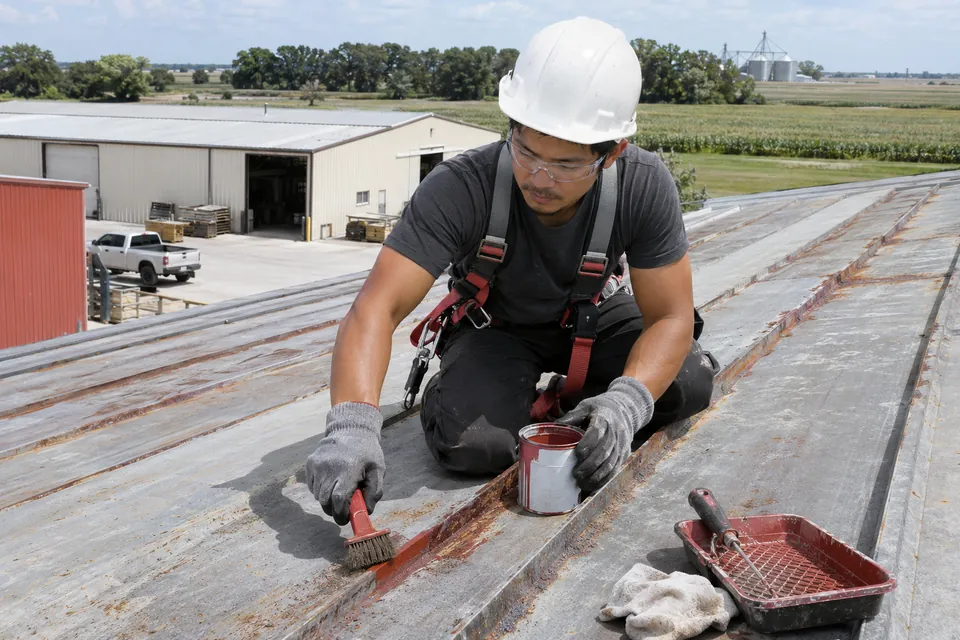
Exposed-fastener and standing-seam steel roofs on plants, shops, and warehouses. We treat rust, replace failed screws, reinforce laps with fabric, and coat the full field so the panels stay in place.
Leak repairs, screw replacement, and roof walks.
Washing, rust primer, and full coats on dry panels.
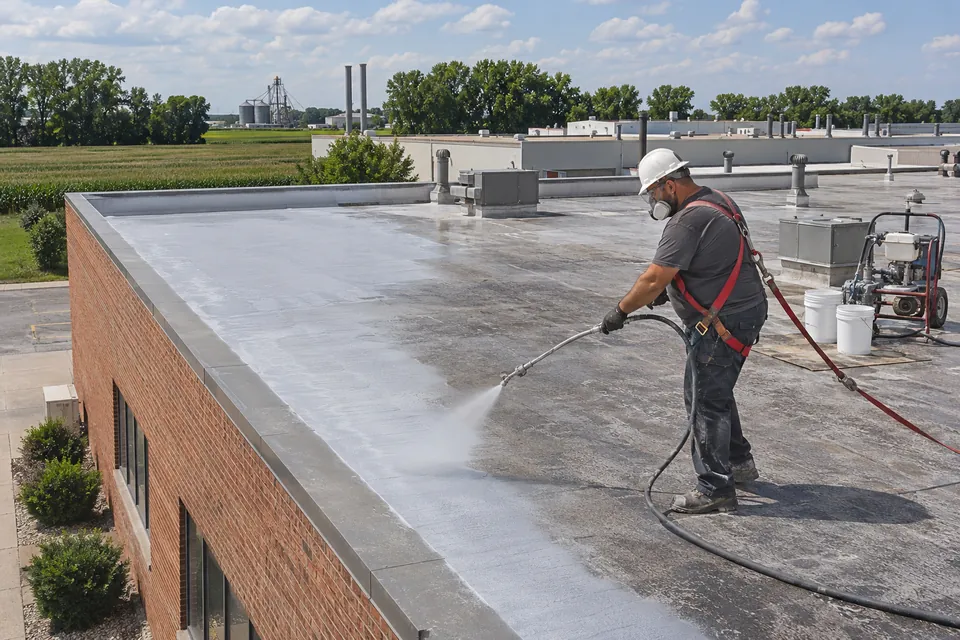
Low-slope metal, foam, and single-ply roofs where water sits after rain. Silicone holds up under standing water, and later recoats must also be silicone, which we plan for from the first coat.
Leaking laps patched with silicone sealant.
Full silicone passes on a clean, dry surface.
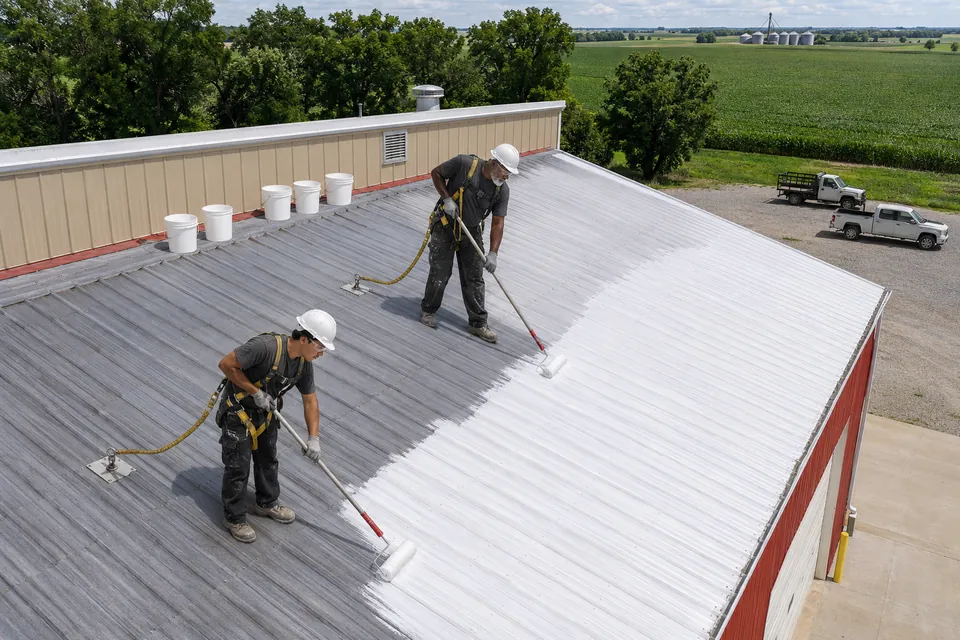
Sloped metal panels that shed water quickly. Acrylic is water-based, so it needs dry weather and mild nights to cure, and it takes recoats of more acrylic easily years later on the same roof.
Job planning and detail repairs ahead of coating.
Coats go on once nights stay above label temperature.
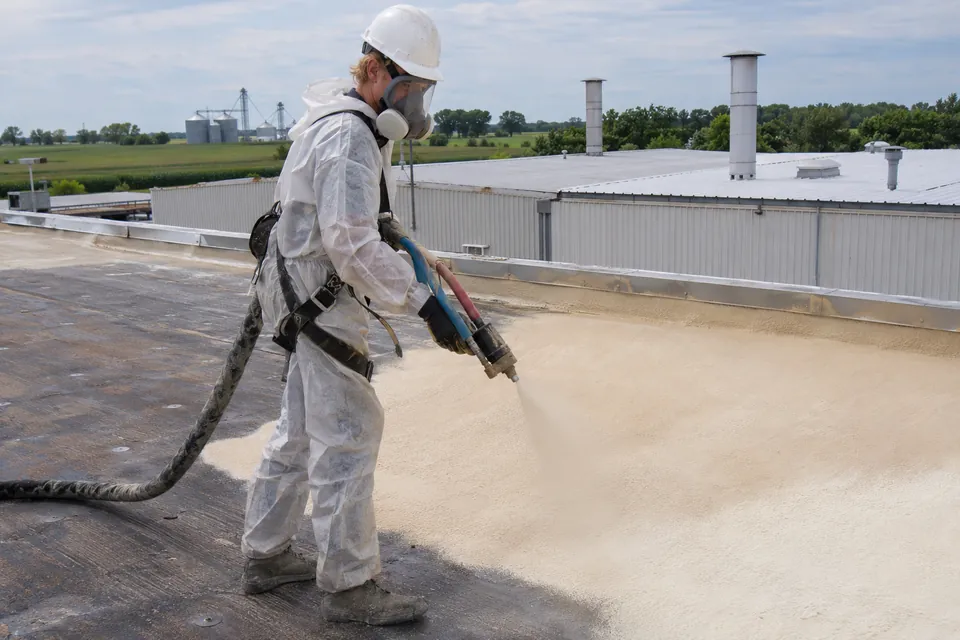
Dry, structurally solid roofs that need insulation and one continuous waterproof layer. Foam is sprayed over the old roof, then topcoated with silicone or acrylic to keep sunlight off the foam.
Core cuts and moisture tests on the old roof.
Foam and topcoat on dry, warm surfaces.
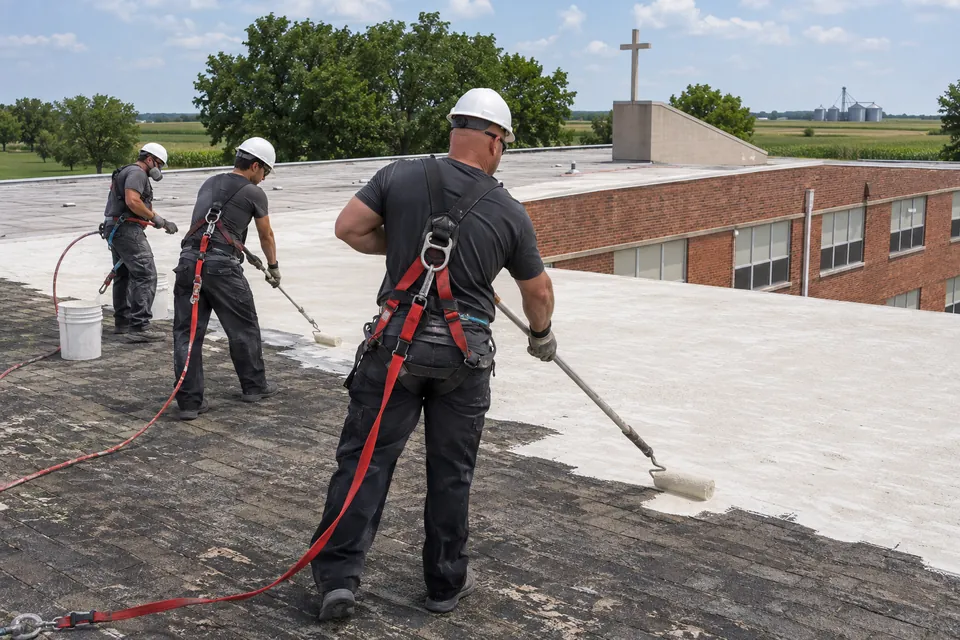
Steep-slope asphalt shingle roofs on offices, clinics, churches, and small retail buildings where the shingles still lie flat. Curling or brittle shingles across the roof point to replacement, and we say so plainly.
Blown-off shingles replaced and flashing resealed.
Coating on clean shingles after a dry stretch.
Call and tell us where the drip lands inside. We trace it to the screw line, lap, or curb above it.
Call UsGet a planning range for coating your roof, then we walk it with you and confirm what it needs.
Get A Free Ballpark EstimateEvery coating job follows the same order, from the first roof walk to the final coat. These are the steps you will see on your building.
Walking the panels, we mark loose screws, open laps, rust, and soft spots, then check the insulation for moisture from above and below. You get a plain account of what can be coated and what needs repair first.
Failed screws come out and larger ones go in. Rusted-through panels, cracked skylight panels, and loose flashing are replaced so the coating covers solid steel.
Pressure washing removes dirt, chalk, grain dust, and oil film. Rusted areas get a rust-inhibiting primer, and the primer cures before anything goes over it.
Laps, screw heads, curbs, and penetrations get a detail coat, with fabric where joints move. These spots leak first, so they get extra material before the field coat.
Base and top coats go on in measured passes to the thickness the manufacturer specifies for that system. We check mil thickness as we go and leave drains, gutters, and walkways clear.
Four common roofs, and the job each one starts with. Most metal roofs in solid shape can be coated, and one situation calls for panel work first.
The steel is firm and the leaks trace to fasteners and seams, so the roof is a good coating candidate after detail repairs.
Large open roofs over stored product get coated in sections, so the building keeps running and nothing above the racks gets opened up.
Ponding on a low-slope section points to silicone, which handles standing water better than acrylic does.
When holes run across many panels, those panels come out before any coating goes on, and full replacement can cost less.
Each pair names a wear point on an aging metal roof and what the coating work does about it.
Moisture sits where panels overlap and at the low end of each run, and rust creeps outward from there.
Rust is cleaned back to firm metal and primed, then the coating seals the surface so water and air stop reaching the steel.
Daily heating and cooling moves the panels, which loosens screws and cracks the rubber washers under them.
Failed screws are replaced with larger ones, each head is sealed, and the coating ties the fastener rows into one continuous layer.
Dark, weathered steel absorbs summer sun and passes that heat into the space below the panels.
A white or light-colored coating reflects much of that sunlight, which can lower heat gain through the roof and into the building.
Tearing off a metal roof means removing panels over equipment, stock, or people, plus disposal and new steel.
Coating keeps the existing panels in place. As planning ranges, coating runs about $2.50 to $4.00 per square foot and replacement about $5 to $8.
We take metal roof coating work in Columbus and five towns nearby. Building outside them? Call us or send us a message.
Shop roofs where skylight panels, vent curbs, and pipe boots need sealing first.
Storefronts and offices coated in sections while the doors stay open.
Low-slope metal roofs that hold water after rain and often call for silicone.
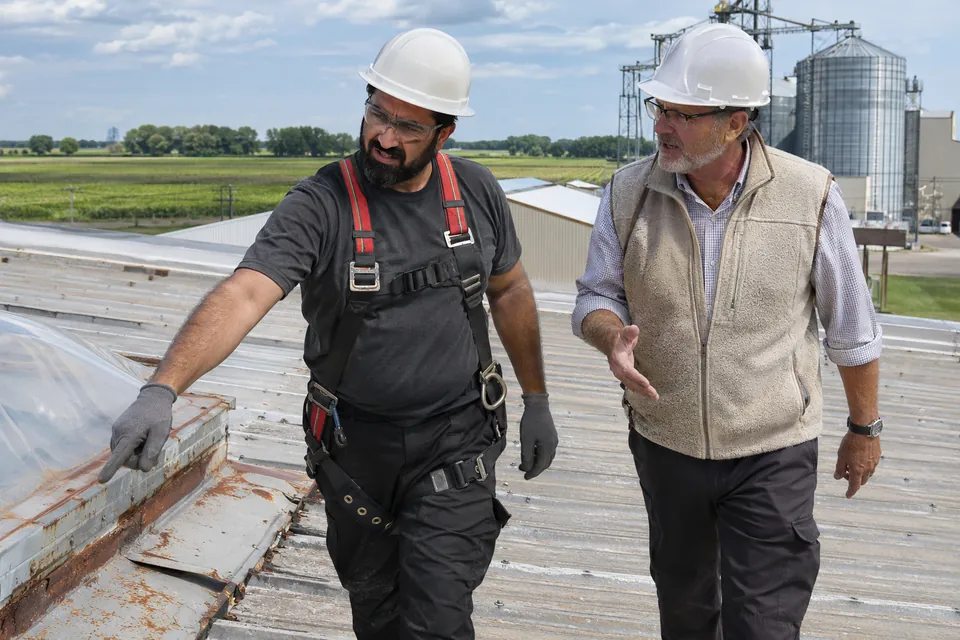
Call and describe what you see on the roof or the ceiling. We will tell you what to check first.
Call UsYes, as long as the steel is firm and the water gets in at laps, screws, and penetrations. Coating a warehouse roof keeps the panels in place over stored product, so nothing gets opened up above the racks. We wash off grain dust and fertilizer residue first, seal every lap and screw, then coat the whole field.
Only if rust has eaten holes through the steel or left panels weak. Light pitting and surface rust clean up and take primer well. We probe suspect spots from the roof and look at the underside from inside the building, then replace any rusted-through panels and coat the rest.
That comes down to the system, how thick it goes on, and how well the roof was prepared. Manufacturers rate their coating systems by film thickness, often somewhere between 10 and 20 years. Hail, heavy foot traffic, and debris left on the roof wear it sooner, and a recoat renews it without a tear-off.
Coat it when the steel and framing are solid and the trouble sits at seams and screws. Replace it when rust has gone through panels across large areas or the insulation is soaked throughout. For planning, coating runs about $2.50 to $4.00 per square foot and replacement about $5 to $8. A roof walk settles which one fits.
Columbus works from the 2018 International Building Code, with local changes in Section 150.002 of the Columbus City Code. For existing buildings, the Nebraska State Building Code (Neb. Rev. Stat. 71-6403) adopts the 2018 International Existing Building Code. Ask the Columbus Building Department whether your coating job needs a permit before work begins.
Tell us about the leaks, rust, or worn coating on your building. We will walk the roof and explain what it needs.