Ponding At End Laps
Standing water collects where one panel overlaps the next at the low end of a run. It sits against old mastic for hours, and the lap starts to weep into the building after heavy rain.

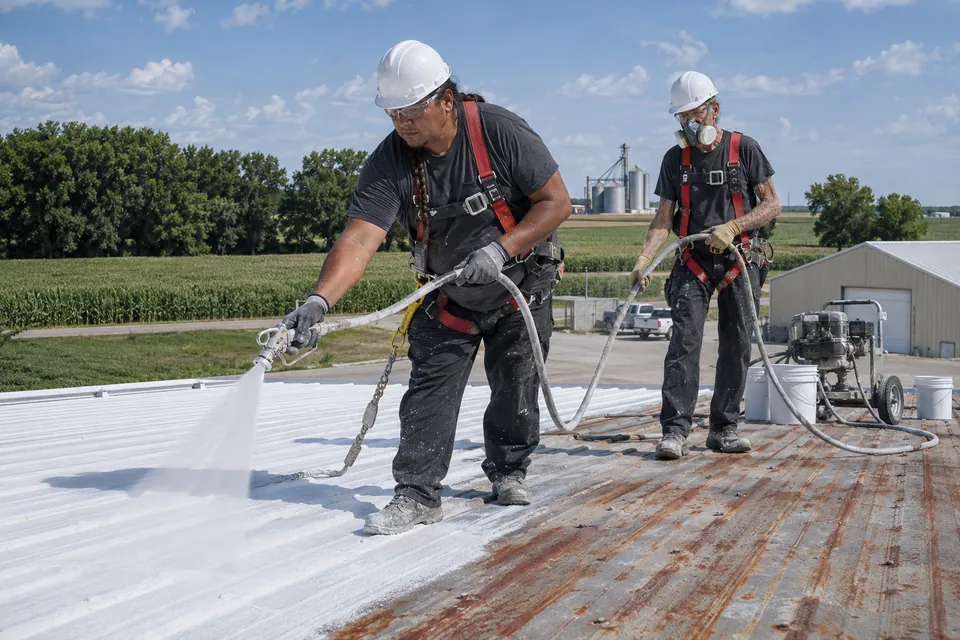
As a Schuyler metal roof coating contractor, we seal laps and fasteners, then coat low-slope metal roofs with a system matched to how fast your panels drain.
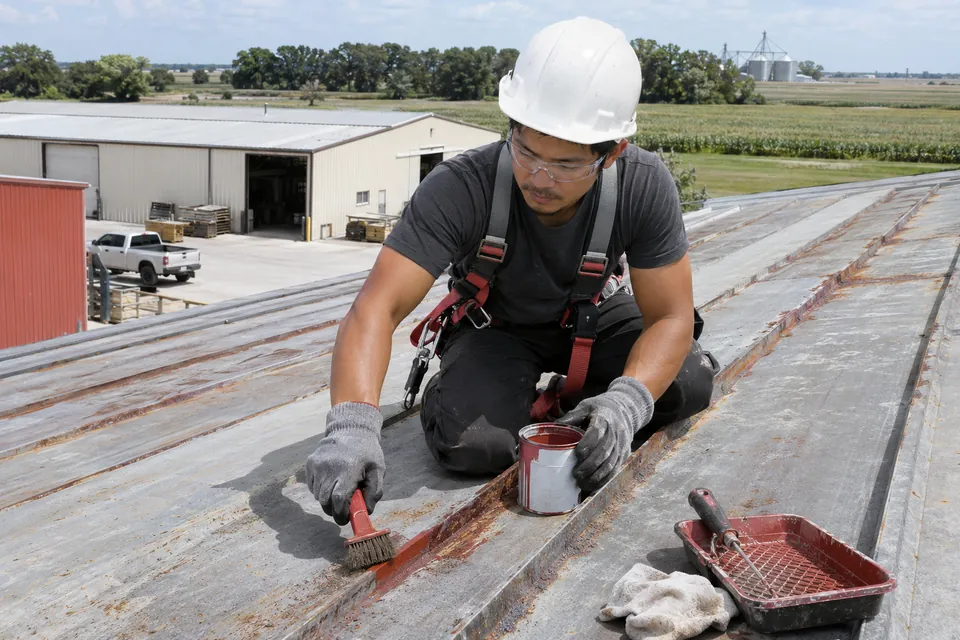
Schuyler metal roof coating starts with one question on low-slope buildings: where does water still sit an hour after the rain stops?
On a shallow pitch, panels sag slightly between purlins and end laps catch a lip of water. That standing water soaks old sealant, lifts washers, and leaves a rust line along the low end of each run. We mark those spots with a level and photos before choosing any coating.
Panels that shed water within minutes take acrylic well. Panels that hold a film of water for hours get silicone, which keeps its grip in wet conditions. Many low-slope buildings need both: acrylic on the steeper wings and silicone across the flatter center bays.
These six conditions show up most on shallow metal roofs that hold water. Each one changes the prep list before coating starts.
Standing water collects where one panel overlaps the next at the low end of a run. It sits against old mastic for hours, and the lap starts to weep into the building after heavy rain.
Light orange streaks form along the bottom edge of panels that stay damp longest. Surface rust is wire-brushed and primed, while panels with holes are cut out and replaced before any coating.
Rubber washers under screw heads dry out and crack after years of sun and freeze cycles. Water then follows the screw shank down through the panel, often far from where the drip shows inside.
Leaves, dust, and debris block gutters on low eaves, so water backs up onto the panels. We clear and test every outlet before coating so the finished roof drains the way it should.
Insulation under a leaking lap holds water and sags its facing. We check it from inside with a moisture meter, since wet insulation has to come out before a coating goes over it.
Ridge caps and end closures shift as panels expand on warm days. Old sealant tears loose there, and wind-driven rain gets in at the top of the roof as well as the bottom.
Each benefit below ties a wear point on low-slope panels to the coating step that deals with it.
Mastic at low laps softens after repeated soaking and lets water creep between the panels.
Silicone over fabric-reinforced laps keeps its bond while water sits, so the low end of each run stays sealed between storms.
Exposed steel at scratches, cut edges, and old screw holes rusts first on a damp roof.
Rust-inhibiting primer goes on the treated metal, and the coating covers it in one continuous film across the whole panel field.
Thermal movement works screws loose over time, and each loose head opens a new path for water.
Loose screws are snugged or swapped for oversized ones, then each head is detailed before the coating seals the entire fastener row.
Factory paint chalks and thins in the sun, leaving dull steel that holds dirt and moisture.
A reflective topcoat renews the surface, sheds water faster on the sloped wings, and gives the panels a fresh protective layer.
Three systems cover most low-slope metal roofs. The choice follows drainage, rust level, and whether the building needs added insulation.
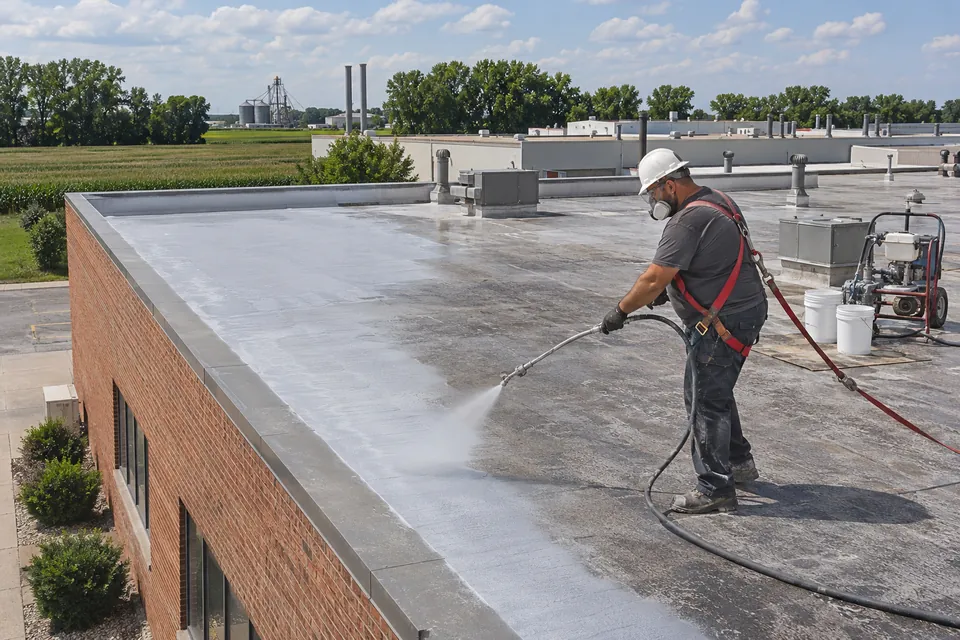
Silicone handles water that lingers after rain, which makes it the usual pick for flatter center bays and long low runs. Later recoats stay with silicone, since few other products bond to it.
Silicone Roof Coating Details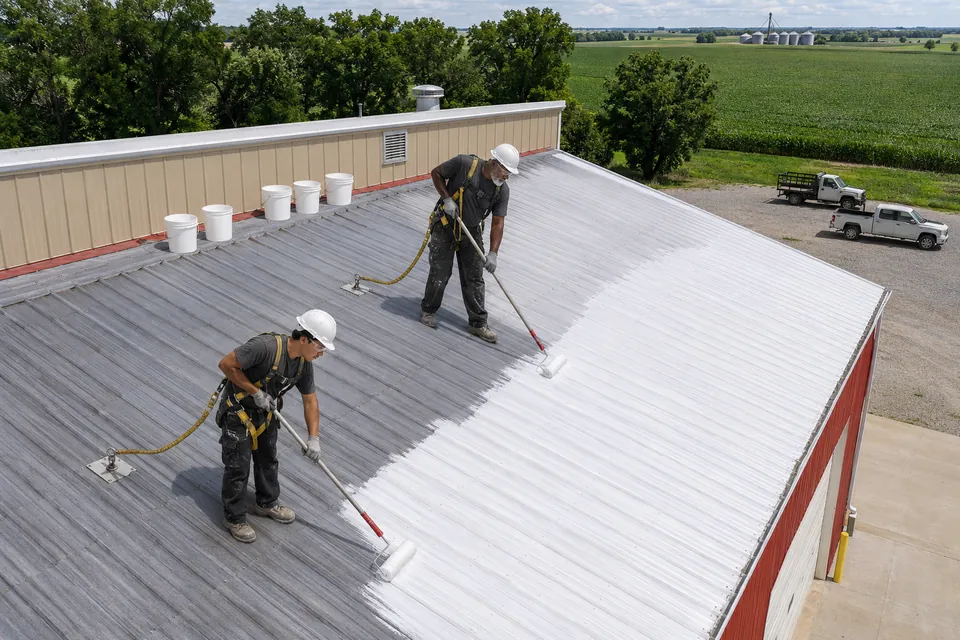
Acrylic works on panels that shed water quickly, such as the steeper wings of a building or a newer addition. It cures in dry, mild weather and recoats easily with more acrylic later.
Acrylic Roof Coating Details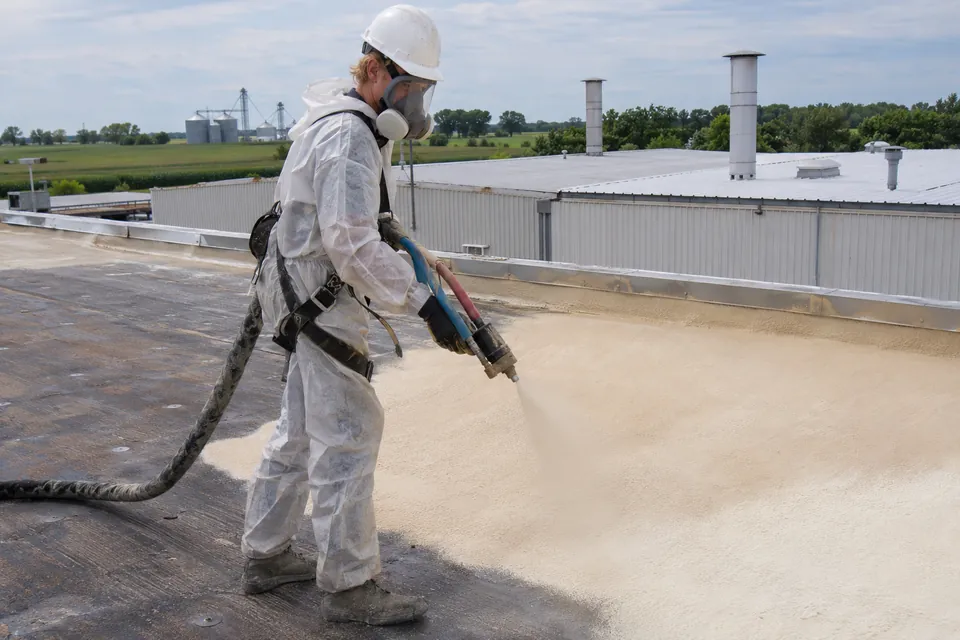
Foam builds up shallow dips and adds insulation in one pass, then takes a silicone or acrylic topcoat. It fits shops where owners want a warmer building as well as a dry one.
Spray Foam Roofing DetailsCall and tell us where the drip lands. We trace it back to the lap or screw row above it.
Call UsGet a planning range for coating your low-slope metal roof, then we walk it with you.
Get A Free Ballpark EstimateFive steps take a low-slope metal roof from leaking laps to a sealed, coated surface. Drainage gets checked before anything else.
Slope, wet spots, and rust lines get mapped on a roof walk, and we check the insulation from inside at every stain. The written scope lists each lap, screw row, and gutter by area.
Pressure washing removes chalk, dirt, and loose rust from the panels. The roof then dries fully, because coating over damp seams traps water against the steel.
Treated rust gets primer, loose screws are replaced, and every low lap gets fabric and sealant. These details carry most of the water on a shallow roof.
Silicone goes across the flat bays and acrylic over steeper panels where the plan calls for it. Each pass is measured for thickness against the product sheet.
After curing, we walk the roof again, photograph every coated area, and confirm water runs to the gutters. You get the photos and a list of what was done.
Besides Schuyler, we take metal roof coating jobs in four nearby towns. Outside them? Call us or send us a message.
Shop roofs where skylight panels and vent curbs get detailed before the coating runs up onto them.
Occupied businesses where materials are staged away from entrances and the work order fits store hours.
Call and describe the slope, the leak, and roughly how big the building is.
Call UsSilicone is the usual answer for a low-slope metal roof in Schuyler, since it holds up where rainwater stays on the panels. Steeper sections that drain quickly can take acrylic, which costs less per gallon. Before choosing, we check the pitch, watch where water collects, and grade the rust. Coating work plans at about $2.50 to $4.00 per square foot.
Schuyler metal roof coating cost follows the planning range of about $2.50 to $4.00 per square foot. Roofs with clean panels and few openings fall near the low end. Heavy rust, many failed laps, wet insulation that needs replacing, and a second coat move the number up. Full panel replacement plans closer to $5 to $8 per square foot.
It includes a roof walk, a written repair list, washing, rust priming, lap and screw work, and the coating itself. Gutters get cleared so the finished roof drains. Afterward you receive photos of each coated area. Shops, storage buildings, and offices with metal roofs all follow the same order, sized to the roof.
Call us and tell us the building's use, the roof size if you know it, and where you see water inside. We set a time to walk the roof, check the insulation from below at any stains, and then lay out repair and coating options with you.
Yes, with silicone over the flat areas once the drains and gutters are cleared. We first check whether the ponding comes from a sagging purlin or a bent panel, since structural problems get fixed before coating. Shallow dips get coated as they are, and deeper ones are built up or corrected so water moves off the roof.
Coating needs a dry roof and temperatures above the product's label minimum, so most coating runs from spring through fall. Winter visits still help: we can inspect, mark wet areas, and seal an active leak at a lap or screw so the building stays dry until coating weather returns.
Tell us where water sits on your roof, and we will plan the laps, rust repairs, and coating around it.