If Your Roof
Rain Sits In Low Spots For A Day Or Two
Silicone holds up under standing water where water-based coatings soften, so ponding areas get a full silicone build after drains are cleared.
Start WithSilicone Roof Coating

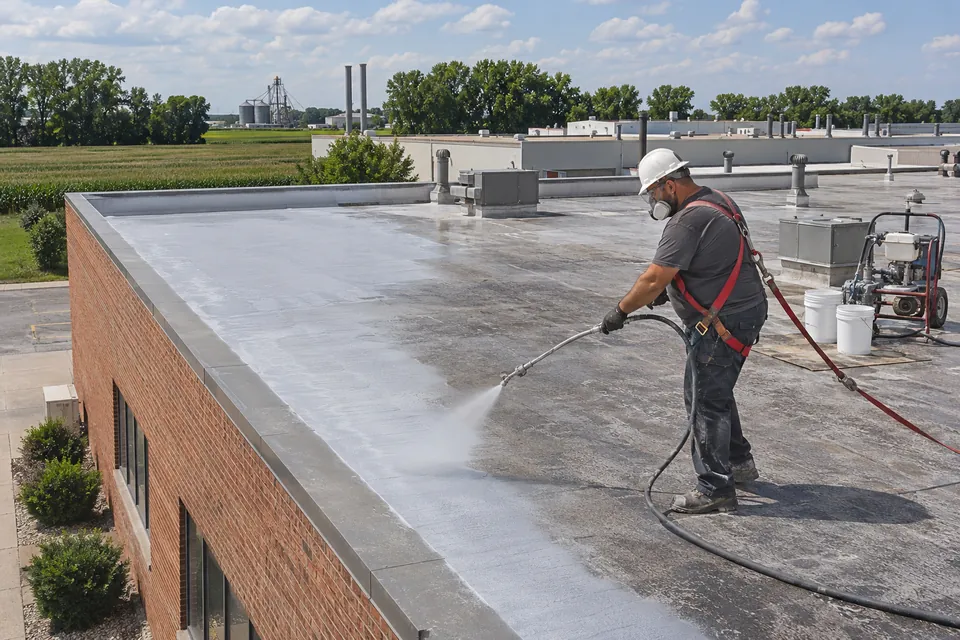
As a Columbus silicone roof coating contractor, we restore low-slope metal and membrane roofs where water sits after rain, starting with a moisture check.
Columbus silicone roof coating fits roofs that drain slowly or hold water in low spots. Find the card closest to your roof.
Silicone holds up under standing water where water-based coatings soften, so ponding areas get a full silicone build after drains are cleared.
Weathered single-ply and modified bitumen roofs can be restored with seam repair, primer chosen by test patch, and a silicone coat.
Low-pitch metal roofs collect water at end laps and eaves, and silicone at those spots outlasts coatings that need fast drainage.
Wet insulation traps water under any coating, so those sections are cut out and replaced before silicone is considered.
Silicone covers a lot of problems, yet these six conditions get fixed first so the coating has a clean, dry base to grip.
Dirt rings and algae mark the spots where water sits after storms. We clear the drains and scuppers feeding those areas and give the low spots an extra silicone build.
Leaves, grain dust, and debris block roof drains and push water back across the field. Clearing each drain and checking its clamping ring comes before any coating goes on.
Older asphalt roofs can stain a white topcoat brown as oils rise through it. A test patch tells us which bleed-blocking primer the roof needs before the silicone.
Seams on aging single-ply roofs open at the edges and corners first. Each one is cleaned, reinforced with fabric, and sealed before the field coat goes on.
On low-slope metal roofs, rust starts at screw heads that sit in standing water. Brushing, priming, and a sealant cap protect each head under the silicone layer.
Spongy spots underfoot point to wet insulation below the surface. Core cuts and a moisture meter find the wet areas so they come out before any coating covers them.
Silicone is one of several coating systems we apply. This table shows where each one fits on Columbus roofs.
| System | Best On | Watch For | Recoat With |
|---|---|---|---|
| Silicone | Low-slope roofs with ponding water | Slick surface when wet or frosty | Silicone only |
| Acrylic | Sloped metal panels that drain fast | Needs dry, warm days to cure | Acrylic or silicone |
| Spray foam with topcoat | Roofs that need added insulation | Wet insulation must come out first | The original topcoat type |
| Shingle coating | Intact asphalt shingles on steep slopes | Curling or brittle shingles | Shingle-rated coating |
Here is how silicone answers the wear that low-slope roofs see most in Columbus.
Low spots hold water for days, and most roof surfaces break down faster where it sits.
Silicone keeps its grip and its film under ponding water, so those low areas stay sealed between storms.
Summer sun chalks and cracks older membranes and paint finishes on flat roofs.
A white silicone film resists UV and reflects sunlight, which can cut heat gain into the building below.
Corners, laps, and edges move the most and split first on aging roofs.
Fabric and sealant at each seam, buried under the silicone build, tie those joints into one continuous surface.
Removing an old roof means open decks, debris, and work crews above occupied space for a long stretch.
Coating keeps the existing roof in place, so tenants and equipment stay put while the work happens on top.
Water dripping through a ceiling tile or along a wall? Call us and tell us where it shows up.
Call UsKnow your roof size and want a planning range? Get a ballpark for silicone coating.
Get A Free Ballpark EstimateEvery silicone job follows the same five steps. Prep takes the most time, and it decides how well the coating holds.
A full roof walk maps ponding areas, drains, seams, and curbs. A moisture meter and a few core cuts locate wet insulation before any coating plan is set.
Pressure washing removes dirt, chalk, and loose granules from the roof. The surface then dries completely, because silicone grips best on a clean, dry base.
Split seams, loose flashing, and cracked pipe boots get fabric and sealant. Clogged drains are cleared so water leaves the roof before and after coating.
Test patches show whether the old surface bleeds or needs help with adhesion. Primer goes on those areas and cures before any silicone is sprayed.
Silicone goes on in one or two coats until it reaches the mil thickness the manufacturer specifies. Ponding areas and seams get extra material.
Many Columbus buildings have more than one roof type, or a roof that needs foam first. These systems cover the rest.
Steeper metal sections get fastener sealing, rust primer, and a coating matched to how fast the panels shed water.
Columbus commercial metal roof coatingSloped roofs that drain quickly can take acrylic, which costs less per gallon than silicone and recoats easily.
Columbus acrylic roof coatingRoofs that need insulation or have uneven low spots can get foam first, then a silicone topcoat over it.
Columbus spray foam roofingOffice wings with aging asphalt shingles can get a coating rated for shingles while the flat section gets silicone.
Columbus shingle roof coating
Roof size, film thickness, and prep work set most of the price. Silicone costs more per gallon than acrylic, and a longer manufacturer coverage term needs a thicker build with more material. Seam fabric, primer, and fastener swaps add labor. For planning, coating work in Columbus runs about $2.50 to $4.00 per square foot.
Owners of Columbus utility garages should know four drawbacks. Dirt clings to silicone, so a white roof turns gray with time. Wet or frosty silicone is slippery for anyone servicing rooftop equipment. Later recoats have to be silicone, since other coatings won't stick to it. And the material costs more up front than acrylic.
Most Columbus roofs take one or two coats, set by the thickness the manufacturer calls for. Silicone can build thick in a single pass, yet splitting it into two coats gives more even coverage. A detail coat goes on seams and screws first, and rough or rusted areas get primer ahead of the silicone.
Its life comes down to how thick it goes on and how the roof is maintained. Manufacturers usually link coverage terms to mil thickness. Silicone stands up to ponding and sunlight on flat sections, while hail punctures, dropped tools, and dirt wear it down sooner. A yearly roof check catches small damage early.
Yes, silicone can go over a weathered acrylic coating once the old film is washed, loose areas are scraped, and an adhesion test passes. The reverse order fails, because acrylic does not bond to silicone. A test patch on the existing coating settles the question before the full roof is coated.
Walkways make sense on any silicone roof that technicians cross often. Silicone gets slippery when wet or frosty, and repeated boot traffic wears the film along the same paths. Walk pads or a granule-dressed strip from the hatch to each unit give better footing and protect the coating where traffic is heaviest.
Tell us where water sits on your roof and what the surface is made of. We will walk it and plan the silicone work.