Skylight Panels Cracked At The Screws
Plastic skylight panels grow brittle in the sun and crack outward from their screws. Rain then drips straight through onto stock or equipment below the opening.

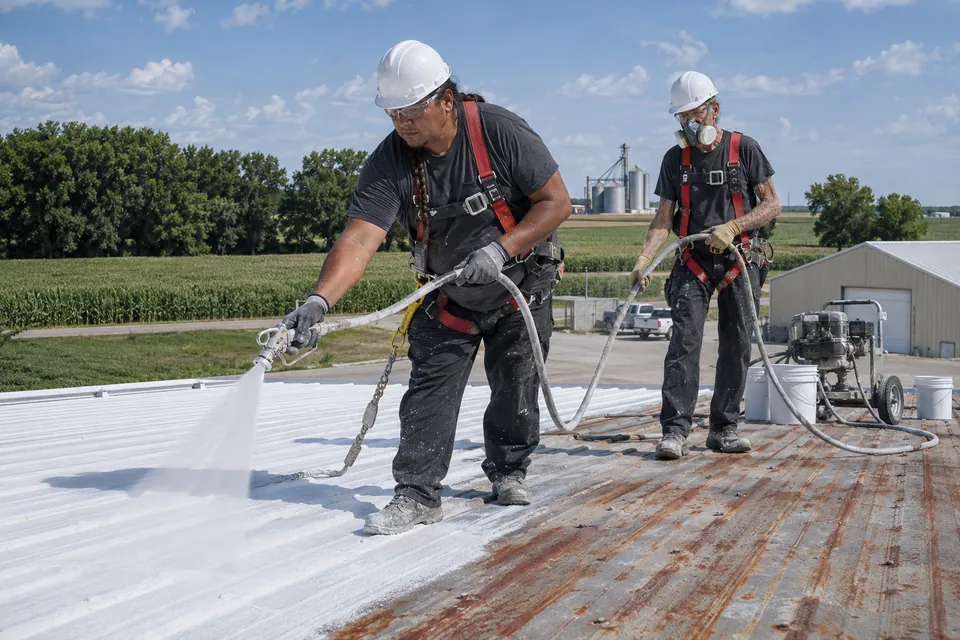
As a Stanton metal roof coating contractor, we rebuild the flashing at skylights, vents, and curbs, then coat the roof so water stays out at every opening.
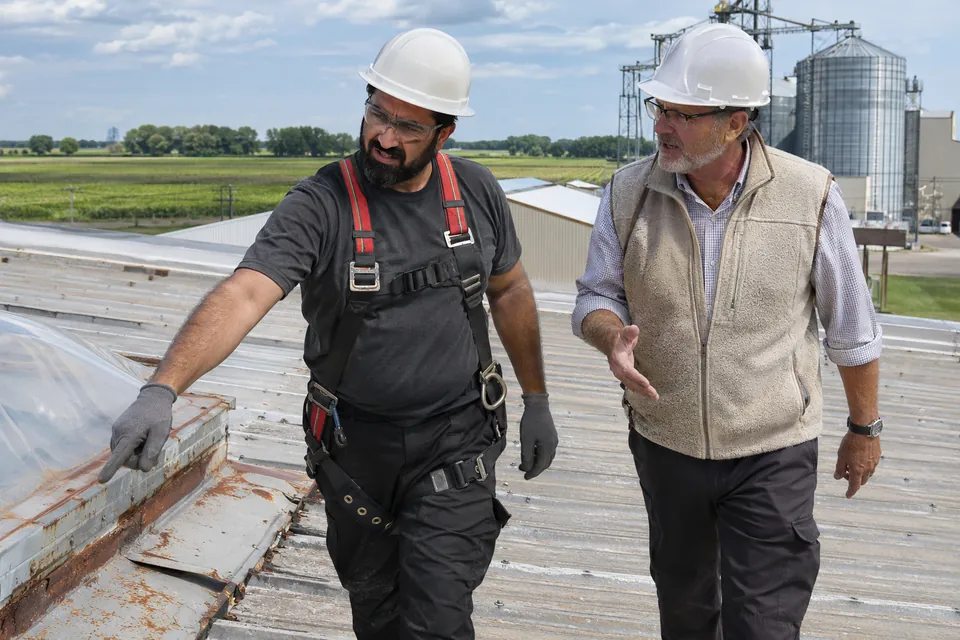
Stanton metal roof coating on shops and stores comes down to the openings: skylights, exhaust vents, pipe boots, and equipment curbs, where most leaks start.
Metal panels shed water well until it reaches a curb or a skylight frame. There the flow splits, sealant ages faster, and screws through the flashing loosen. One cracked skylight panel or a lifted vent boot can soak a wide patch of insulation below it.
We count every opening on the roof walk, mark which ones leak now, and list the work each one needs. Curb flashing gets resealed, cracked skylight panels are replaced, and fabric goes into each joint before the coating runs up the curb sides.
Openings concentrate water, movement, and aging sealant in one spot. These six conditions turn up most often on Stanton roof walks.
Plastic skylight panels grow brittle in the sun and crack outward from their screws. Rain then drips straight through onto stock or equipment below the opening.
Rubber boots around exhaust stacks and pipes split and pull away from the panel ribs. Water runs down the outside of the stack and into the building.
Curbs under fans and heaters move with vibration, and the flashing screws loosen. A gap opens on the uphill side, where water piles against the curb.
Layers of black mastic from past repairs crack and trap water against the steel around openings. That mastic comes off before new flashing and coating go on.
Steel around stacks and curbs stays wet under dirt and leaves, so rust rings form. Those rings get cleaned to firm metal and primed before coating.
Ceiling stains right below a skylight or fan usually trace back to that opening's flashing. We confirm it from inside with a moisture meter before making the repair.
Openings are where a coated roof holds or fails. Each pair below shows the wear and the coating work that answers it.
Brittle panels and loose frame screws let rain fall straight through a skylight onto the floor.
Cracked panels are replaced, frames are refastened and sealed, and the coating laps onto the frame edge to close the joint with the steel.
Aging boots shrink and tear where they wrap the panel ribs around a stack.
New boots are fitted to the rib profile, sealed, and wrapped in fabric, then coated so the stack base and roof form one surface.
Uphill sides of curbs collect water and debris, and the flashing there gives out first.
Rebuilt curb flashing with fabric at the corners, plus coating run up the curb sides, keeps that pooled water away from any seam.
Stacked patches of mastic trap water against the metal and hide rust underneath them.
Old patches come off, the metal is primed, and one coating system replaces the patchwork with a continuous surface that is easy to inspect.
Three systems work on metal roofs with many openings. Detail work at curbs and skylights is the same for each of them.
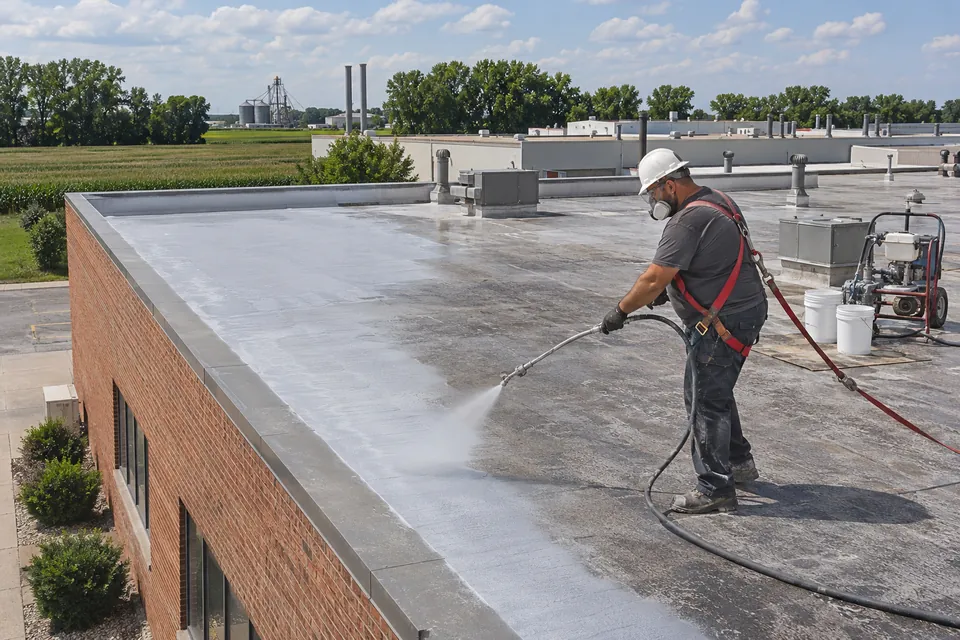
Silicone handles water that sits on the uphill side of curbs and in low spots between openings. It bonds well to reinforced flashing and recoats only with more silicone.
Silicone Roof Coating Details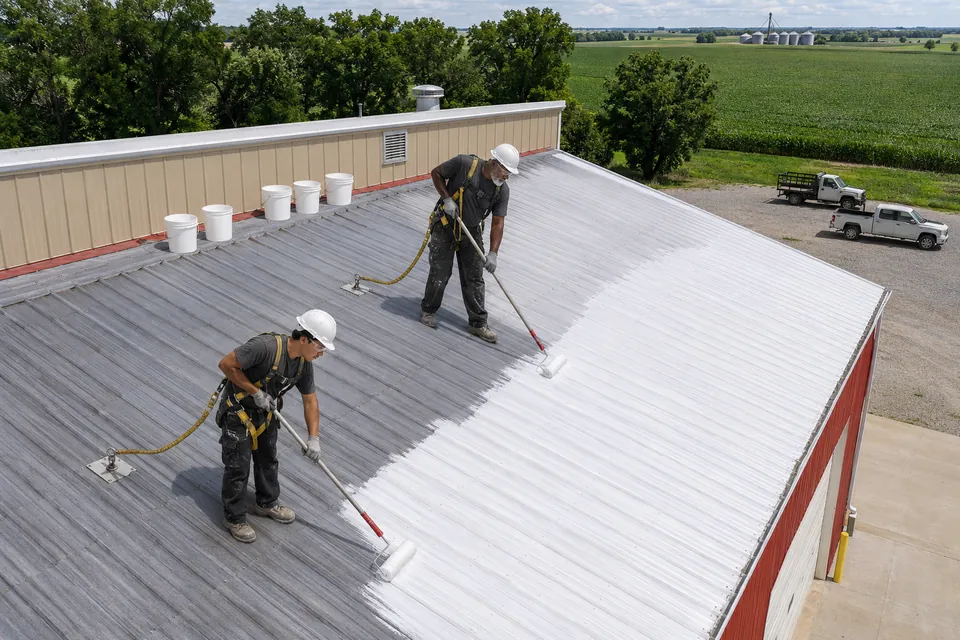
Acrylic suits sloped roofs where water clears the openings quickly. Fabric at every joint carries the extra stress, and future recoats stay simple with more acrylic.
Acrylic Roof Coating Details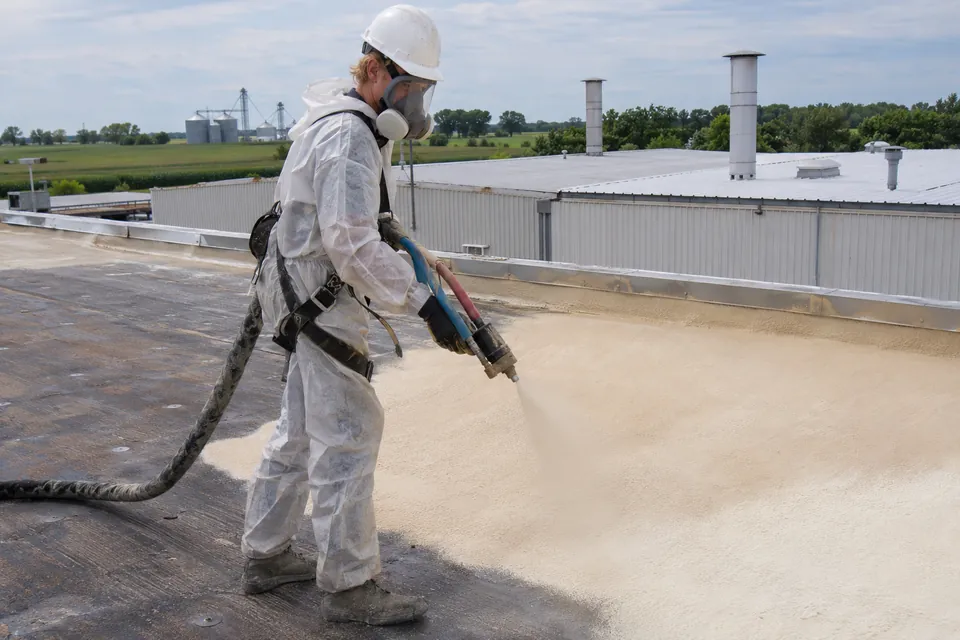
Foam fills around stacks and curbs in one layer and adds insulation, then takes a protective topcoat. Each curb is raised or flashed so the foam height still leaves water a path.
Spray Foam Roofing DetailsCall and tell us which opening sits above the drip. We reseal it and check the rest.
Call UsGet a planning range for your roof, then we count and price every opening on the walk.
Get Free Ballpark EstimateOpenings get their own steps in this sequence, because they decide whether the finished coating stays watertight.
Every skylight, vent, stack, and curb is counted and photographed, and the leaking ones are marked. Inside, we match each ceiling stain to the opening above it.
Old mastic patches come off, dirt and leaves are cleared from curb corners, and the panels are washed. Rust rings get primer once the roof is dry.
Cracked skylight panels are replaced, vent boots refitted, and curb flashing refastened. Fabric goes into every joint where metal meets an opening.
Coating covers the panels and runs up each curb and frame edge at full thickness, checked with a wet film gauge as it goes on.
Hose water runs across skylights and curbs after curing to confirm the details hold. Photos of each opening then go into your building records.
Stanton and four other towns make up the area where we take metal roof coating work. For a building elsewhere, call us or send us a message.
Open businesses where staging stays clear of entrances while coating moves section by section.
Low-pitch roofs where water lingers, so silicone goes over the flat bays.
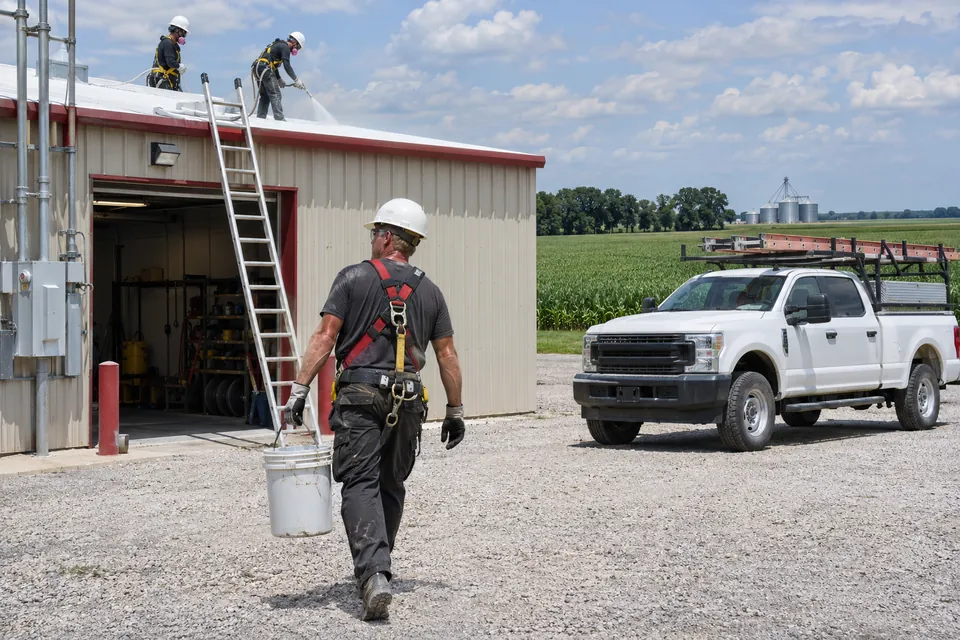
Each skylight and vent needs its own repair before any coating is applied, since openings are where most metal roof leaks begin. We refasten and reseal curb flashing, swap cracked skylight panels, and set fabric into the joints. The coating then extends up each curb. More openings mean more detail work, so they add to the cost.
Stanton metal roof coating cost follows the planning range of about $2.50 to $4.00 per square foot for the coating work. Each skylight, vent, and curb adds detail labor, and replacing cracked skylight panels adds material. Heavy rust or wet insulation raises it further. Panel replacement plans at about $5 to $8 per square foot.
It involves a roof walk that counts every opening, a written repair list, cleaning, primer on rust, flashing and skylight repairs, and the coating at full thickness. Stores, shops, and offices follow the same order, with the work scheduled around the hours you keep.
Yes. Small stores and shops in Stanton get the same opening-by-opening repair and coating as larger buildings. Fewer openings usually mean a shorter job, and the walk shows exactly how many need work before you commit to anything.
That comes down to how much daylight you still want. Cracked or yellowed panels you want to keep get replaced with new ones and flashed in. Skylights you no longer use can be covered with metal panels matched to the roof profile, then coated along with the rest of the roof.
Equipment stays in place on its curb. We shut down or protect units only during spraying near their intakes, working with you or your service company on timing. Curb flashing gets repaired around each unit, and the coating runs up the curb sides so water clears the equipment.
Tell us how many skylights, vents, and curbs your roof has, and we will plan the detail work before coating.