Split End Laps
Overlaps partway down a long run open up as the panels expand and shrink. Water rides the top panel and slips under, leaving a drip line across the whole width of the building.

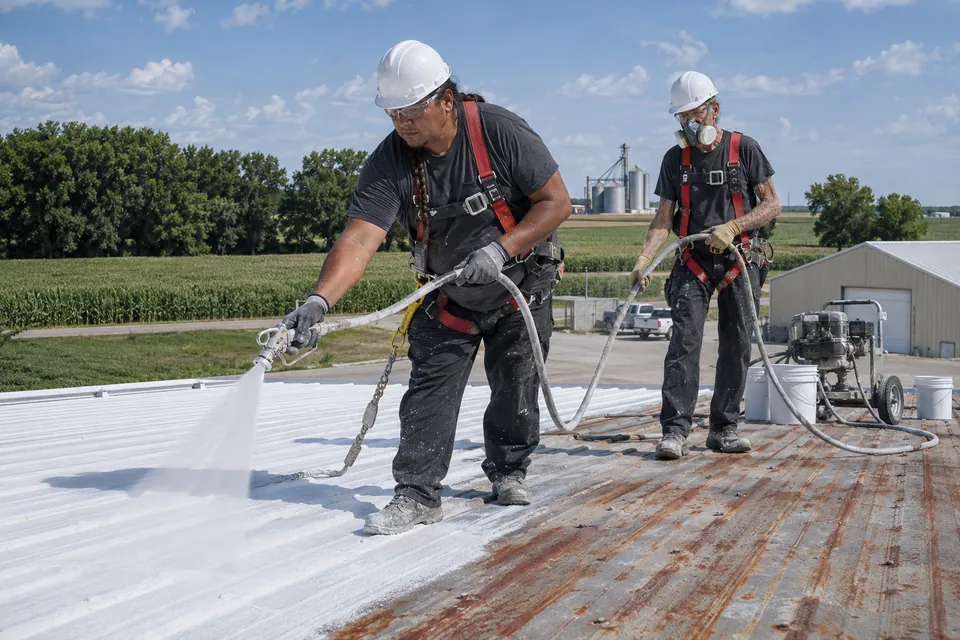
As an Albion metal roof coating contractor, we restore long metal roofs on equipment shops and co-op buildings, starting with the end laps and screw rows.
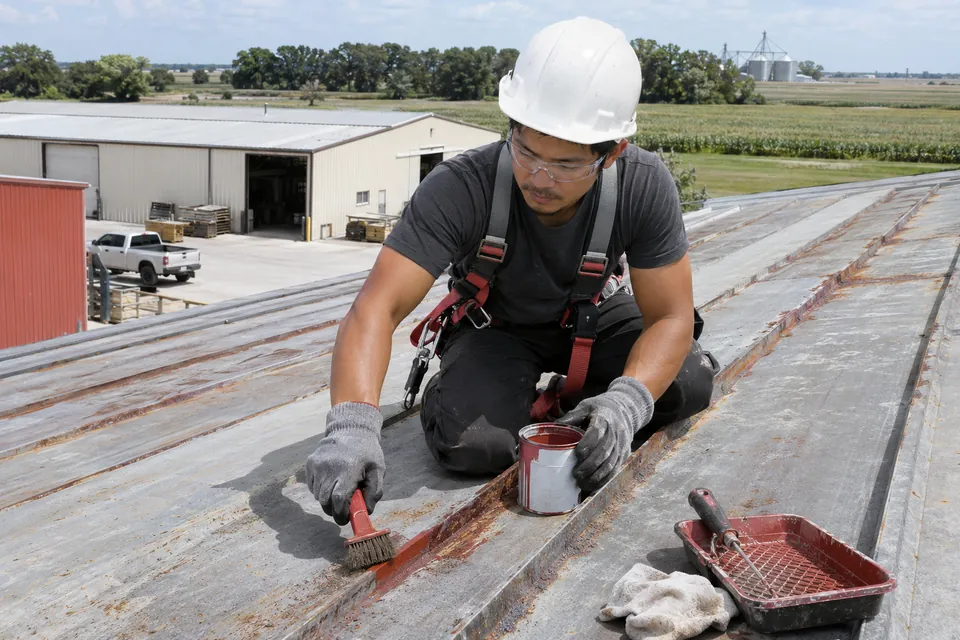
Albion metal roof coating on farm and commercial buildings starts at the end laps, where long panel runs overlap and water finds its way in.
Equipment shops and co-op buildings often have panels that run a long way from ridge to eave, joined by end laps partway down. Each lap moves as the steel heats and cools, so the sealant between panels tears and screws work loose along those lines.
We walk every run, count the failed fasteners, and open a few laps to see how the old sealant held. Options come only after that walk, since a shop with tight laps and one with rusted panel ends need very different jobs.
Long metal roofs on shops and storage buildings wear in predictable places. These six get checked on every Albion roof walk.
Overlaps partway down a long run open up as the panels expand and shrink. Water rides the top panel and slips under, leaving a drip line across the whole width of the building.
Screws along the purlins back out after years of movement and wind. Rows near the eaves usually fail first, since they carry the most water and the most uplift.
Bottom edges stay wet longest and rust from the cut edge upward. Light rust gets primed, while panel ends with holes are cut back or replaced before coating.
Where a lean-to or newer addition meets the main roof, the flashing pulls apart and the sealant cracks. That joint gets new flashing and fabric before it is coated.
Translucent panels in long shop roofs turn brittle and crack around their screws. Cracked panels are replaced or covered with metal before the surrounding steel is coated.
Open ridge vents and caps on long buildings let wind-driven rain in once their closures fail. New closures and sealant go in, then the coating covers the cap laps.
On a long roof, small fixes repeat across every run, and coating ties them together into one surface.
Sealant alone at long end laps tears again as the panels move through hot and cold seasons.
Fabric-reinforced sealant over each lap flexes with the steel, and the coating bridges it so the lap stays closed through those swings.
Every screw head is a small hole, and long roofs carry rows of them on each purlin line.
Each head is tightened or replaced and detailed, then sealed under the coating so one aging washer is no longer the only barrier.
Original factory paint fades to a chalky film that rubs off on hands and holds moisture.
Washing removes the chalk, primer bonds to the clean steel, and a light topcoat restores a smooth surface that sheds water and reflects sun.
Rust at cut edges and panel ends creeps upward and thins the steel as the years go by.
Treated edges get rust-inhibiting primer and extra coating, which slows that spread and keeps the rest of each panel in service.
These three systems cover most metal shops and storage buildings we see. Slope and insulation needs point toward one of them.
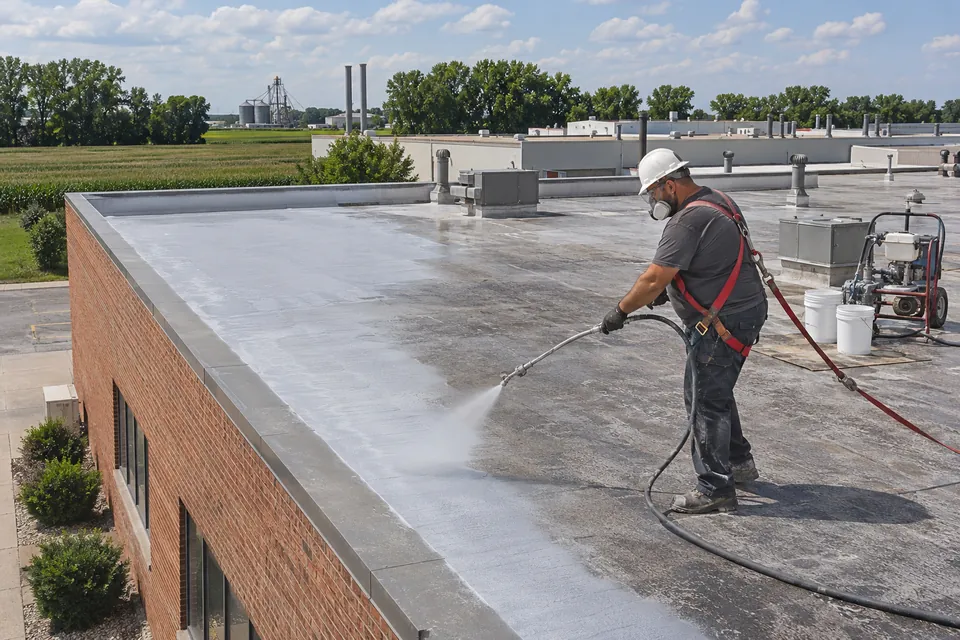
Low-pitch shop roofs and flat lean-tos that hold water after rain take silicone. Recoats later stay with silicone, so we note that in your building records.
Silicone Roof Coating Details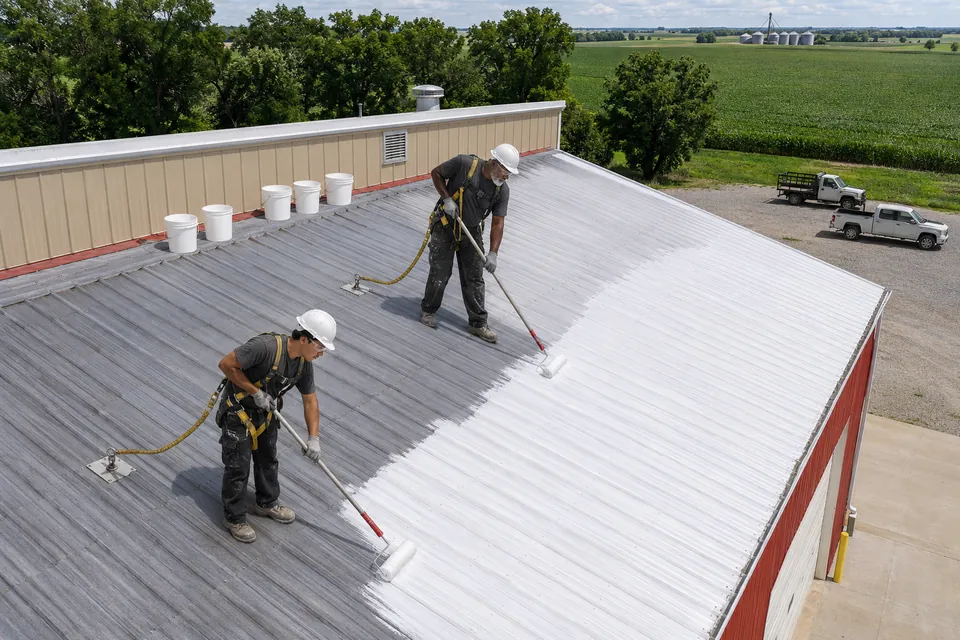
Long sloped runs that shed water fast are a good match for acrylic, which costs less per gallon and recoats easily. It goes on in dry, mild weather.
Acrylic Roof Coating Details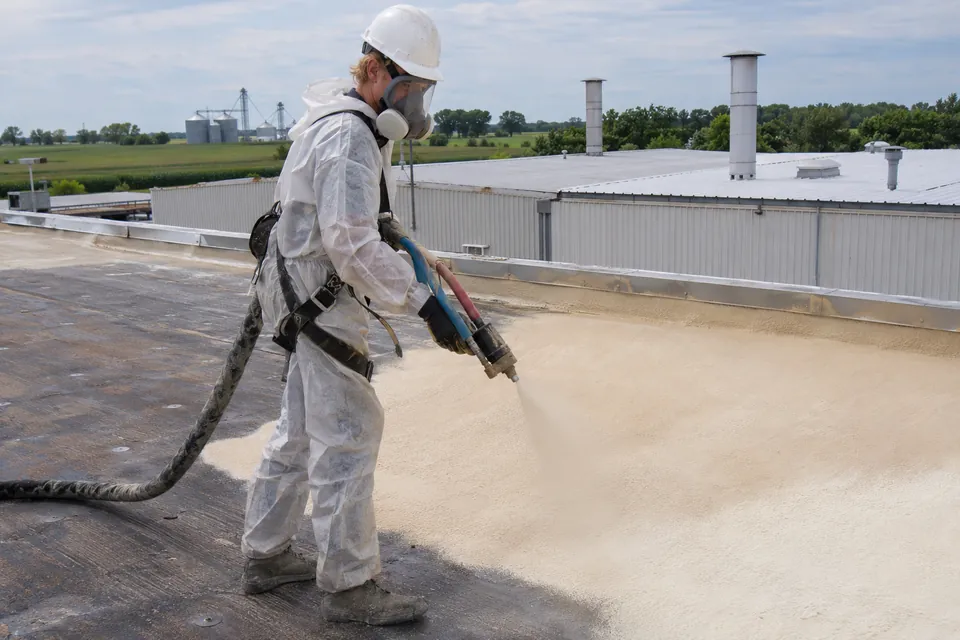
Shops and storage buildings with little or no insulation gain a sealed, insulated layer from spray foam. A silicone or acrylic topcoat then protects the foam from sun.
Spray Foam Roofing DetailsCall and tell us which bay it falls in. We follow the run up to the lap or screw row.
Call UsGet a planning range for coating your shop or storage roof before we walk it with you.
Get A Free Ballpark EstimateThese five steps apply to equipment shops, co-op buildings, and storefronts alike. Long roofs simply get them in more sections.
Every panel run is walked from ridge to eave, with laps opened in a few places and screws checked row by row. Inside, we look for daylight, rust flakes, and damp insulation.
Your choices come after the walk: repair only, coating with repairs, or replacement of failed panels with coating over the rest. Each option lists its prep work.
Pressure washing clears chalk and dirt, then treated rust spots get primer. Long runs dry fully before the next step begins on them.
End laps get fabric and sealant, and failed screws get oversized replacements. Lean-to joints and ridge closures are rebuilt during this step too.
Coating goes on run by run at the specified thickness, measured as we go. A final walk with you covers every lap and leaves photos for your records.
Four more towns get the same roof walk and options we bring to Albion. For a building farther out, call us or send us a message.
Grain and equipment roofs that get a full wash and dry-out so coating bonds to clean steel.
Metal shops where skylight panels and vent curbs are rebuilt before the coating runs up them.
Stores and offices coated in sections around opening hours and customer entrances.
Flat center bays that keep water after storms, matched with silicone over reinforced laps.
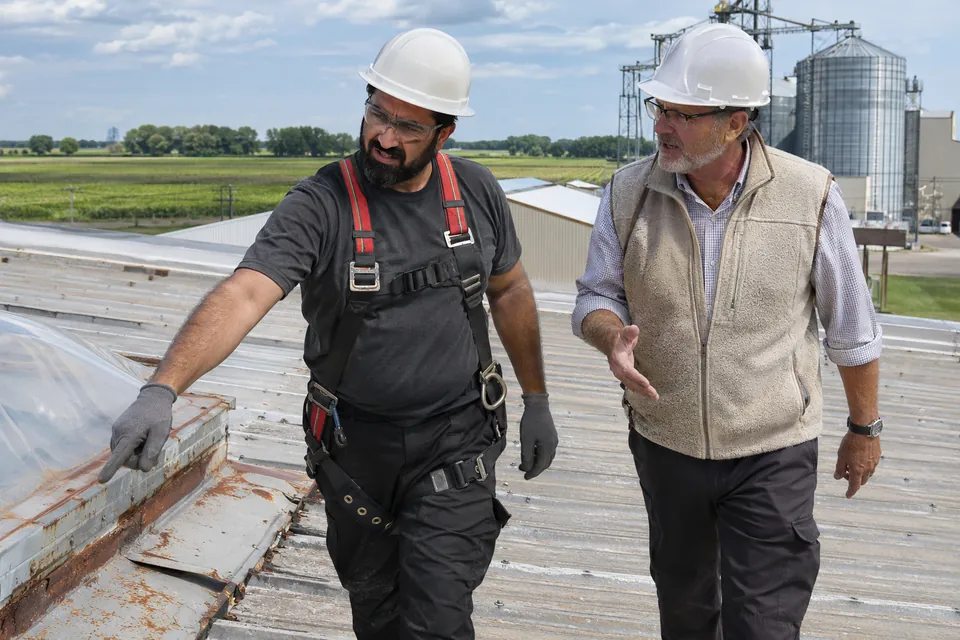
Call with the building's size, its use, and where you see drips or daylight inside.
Call UsYes. We coat commercial and farm metal roofs in Albion, from equipment shops to storefronts. Every job begins with a walk of the panels, laps, screws, and rust, followed by the coating choices and the things that move the price. For a building beyond our listed towns, call and we will tell you whether we can reach it.
It covers the roof walk, a repair list, washing, rust primer, lap and screw work, and the coating at the thickness the product calls for. Shops, co-op buildings, offices, and stores all follow that order. Larger roofs are split into sections so the work moves in a planned sequence.
Albion is one of the towns we cover from Columbus, so your building gets the same walk and options as buildings in town. Call with the address and the rough roof size, and we set a visit that fits your schedule and the weather.
Call and describe the building: its use, rough size, roof type, and where water shows inside. We agree on a time to walk the roof, check the insulation under any stains, and then talk through the repair and coating options with you.
Often, yes. Daylight at end laps usually means torn sealant or loose screws, which get fixed with fabric, sealant, and new fasteners before coating. Where the panel ends around those laps are rusted through, those panels are replaced first, and then the whole roof is coated together.
Yes, once its joint with the main building is repaired. That joint gets new flashing and reinforced sealant first. Low lean-tos that hold water usually take silicone, while the main sloped roof can take acrylic or silicone, and both are coated during the same job.
Tell us about your shop or storefront roof, and we will walk every run before suggesting a coating.