If Your Roof
Screws Leak Along The Purlin Lines
Cracked washers and backed-out screws let water in at every purlin row, and a fastener-by-fastener seal with a full coat stops those drips.
Start WithMetal Roof Coating

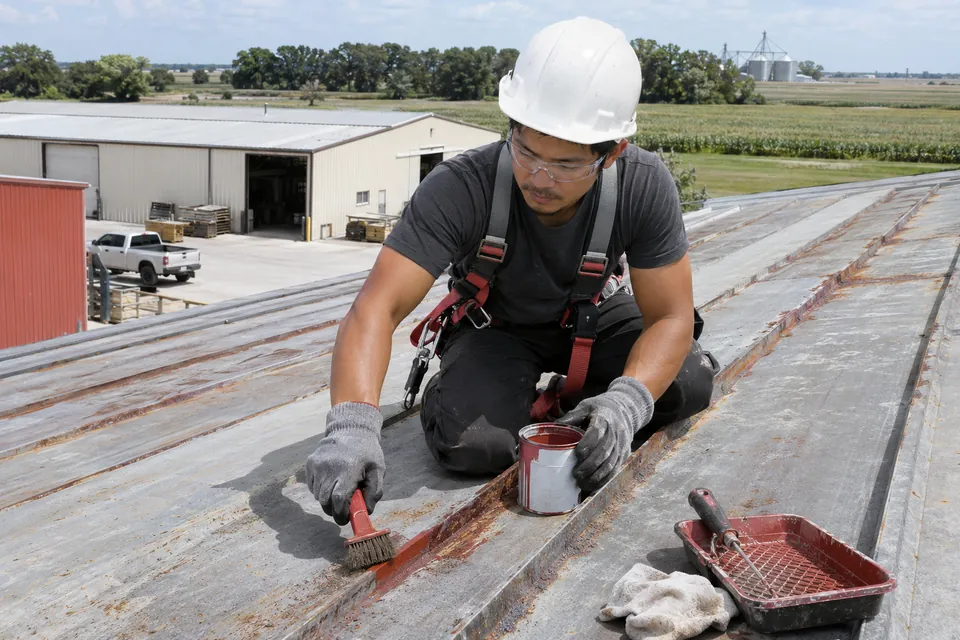
As a Columbus commercial metal roof coating contractor, we seal leaking screws and laps, prime rust, and coat the whole panel field on plants and warehouses.
Columbus commercial metal roof coating works when the panels are firm and the leaks sit at screws and laps. Match your roof to a card below.
Cracked washers and backed-out screws let water in at every purlin row, and a fastener-by-fastener seal with a full coat stops those drips.
Surface rust brushes off to firm steel, so a rust-inhibiting primer and a topcoat restore the panel face.
Panels grow and shrink with temperature, so laps get stitch screws, fabric, and sealant before the field coat goes on.
Holes you can push a screwdriver through mean those panels come out first, and coating waits until new steel is in.
These six conditions show up on Columbus metal plants, warehouses, and utility garages. Each one gets fixed before any coating goes on.
Vibration from plant equipment and years of panel movement loosen screws until their washers no longer seat. We pull failed screws, upsize stripped holes, and seat new fasteners with fresh washers so each head can be sealed and coated.
Gaps at the side laps let wind-driven rain run sideways under the panel edge. Stitch screws pull the lap tight, then sealant and a fabric strip bridge the joint before the field coat goes down.
End laps hold moisture longer than the rest of the roof, so orange bloom and flaking start there first. Scale comes off with wire brushes, and the bare spots get a rust-inhibiting primer.
Pipe boots crack and curb flashing pulls loose where rooftop units shake. New boots, resealed flashing, and fabric at each corner close the openings so coating can run up the sides.
Ice and debris sit in gutters through winter and rust the eave trim from behind. Clearing them, sealing the gutter joints, and priming the trim keeps water moving off the panel ends.
Soaked insulation under the panels holds water against the steel and hides leak paths. A moisture check marks those bays, and wet sections come out before any coating covers them.
Three coating systems go over metal panels in Columbus. The choice comes down to slope, ponding, and how the building is used.
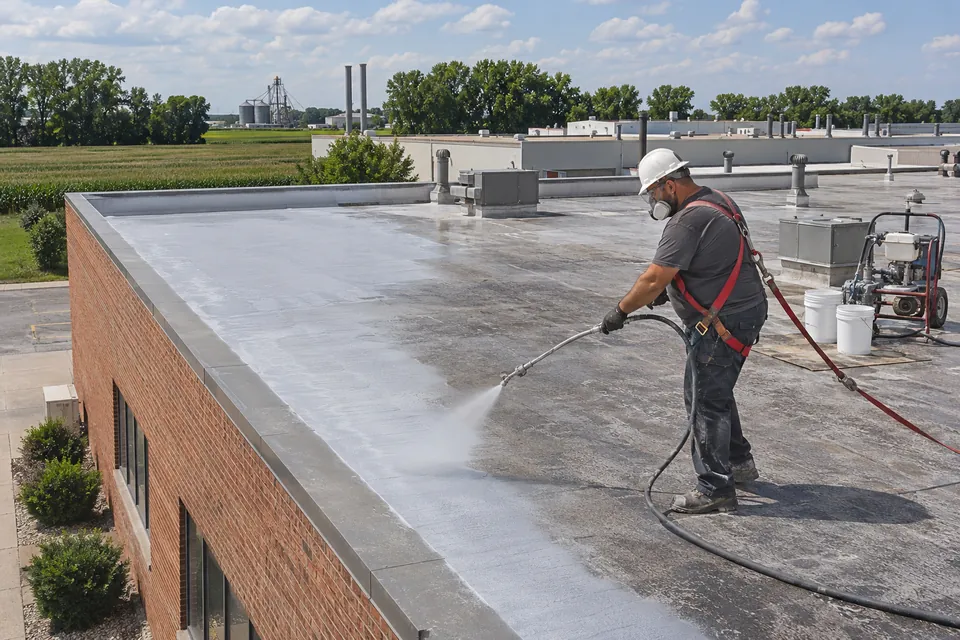
Silicone handles water that sits in low spots after rain, so it fits flatter metal roofs and long eave runs. Recoats later stay with silicone, since most other coatings refuse to stick to it.
Silicone Roof Coating In Columbus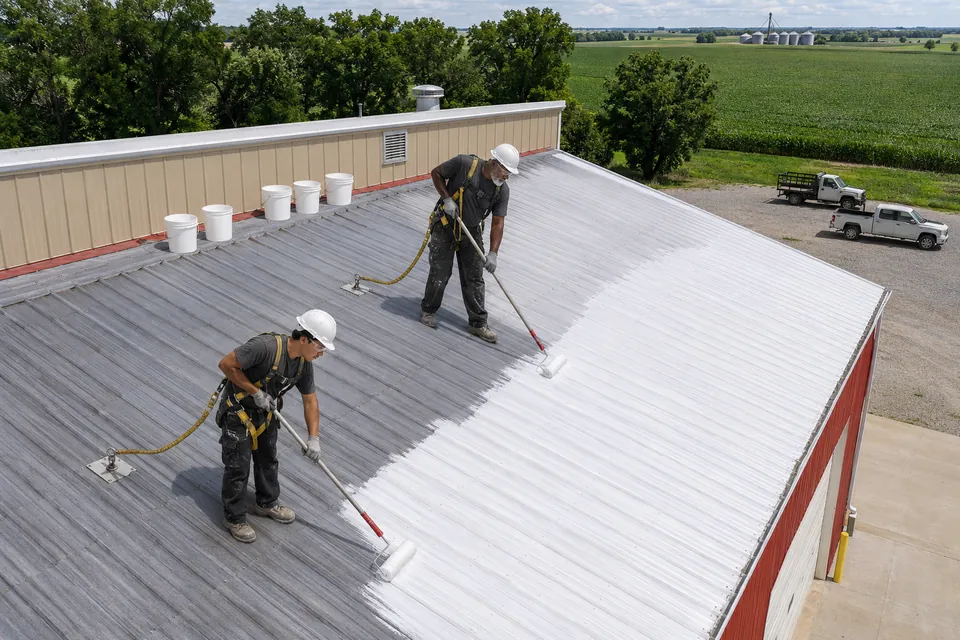
Acrylic goes on as a water-based coat and suits sloped panels that shed water fast. It costs less per gallon and recoats easily, but it needs dry, warm days to cure.
Acrylic Roof Coating In Columbus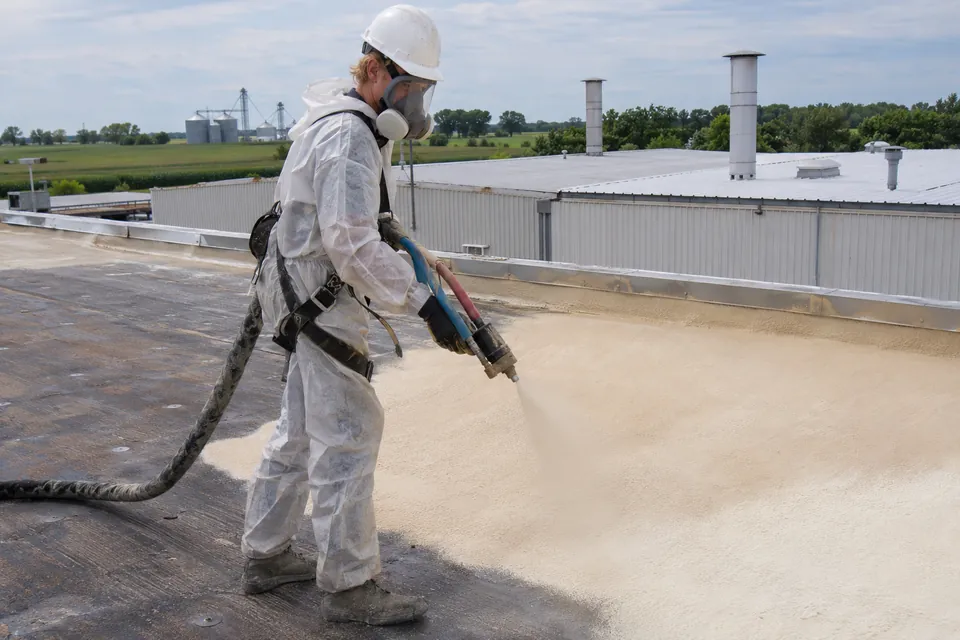
Foam fills the ribs and covers every screw and lap in one continuous layer while adding insulation. A silicone or acrylic topcoat then shields the foam from sunlight and hail scuffs.
Spray Foam Roofing In ColumbusEach benefit below pairs a part of the metal roof that wears out with what the coating work does about it.
Rubber washers harden and crack after years of sun, and each one becomes a small leak point.
Sealed heads under a continuous coating film take the washer out of the job of keeping water out, across every row of the roof.
Daily heating and cooling moves the panels, and side laps slowly open along their full length.
Fabric-reinforced sealant flexes with that movement, and the coating ties each lap into one surface from eave to ridge.
Bare steel at scratches, cut edges, and end laps rusts outward and thins the panel over time.
Primer stops the spread at the treated spots, and the topcoat keeps rain and snowmelt off the steel.
Dark or faded metal absorbs sunlight and passes that heat into the building below.
A white coating reflects much of that sunlight, which can lower heat gain through the roof on plants and warehouses.
Water coming through at a screw line or a ceiling stain growing? Call us and describe where it lands inside.
Call UsHave a dry roof and a budget to set? Get a planning range for coating your metal roof.
Get A Free Ballpark EstimateFive steps, in this order, on every metal roof we coat. Work in the building keeps going below while the crew works above.
A roof walk checks every screw row, lap, curb, and gutter, and a moisture meter marks wet insulation bays. Photos of each problem area go into the scope you review.
Pressure washing strips dirt, chalky old paint, and plant exhaust film so primer and coating can bond. The roof then dries fully before the next step starts.
Loose scale comes off with wire brushes until firm steel shows. Treated spots get a rust-inhibiting primer, with a second pass on heavier rust, and cure before the topcoat.
Failed fasteners are replaced and every head is capped or sealed. Side laps, end laps, and curb flashing get fabric and sealant so movement joints stay closed.
Coating goes on in one or more passes to the thickness the manufacturer specifies. Wet film gauges confirm the build as each section is finished.
Some metal roofs call for a different system, and some buildings carry a second roof type. Here is the other coating work we do.
Flatter metal sections that hold water after storms take silicone well, since the film tolerates ponding without softening.
Columbus silicone roof coatingSteeper ribbed panels that drain fast can take a water-based acrylic coat, which costs less and recoats with ease.
Columbus acrylic roof coatingBuildings that need more insulation can get foam sprayed over the panels, then a protective topcoat over the foam.
Columbus spray foam roofingOffice wings and church buildings with aging asphalt shingles beside a metal shop can get a coating made for shingles.
Columbus shingle roof coating
Call and tell us what you see on the roof or the ceiling below.
Call UsPlan on roughly $2.50 to $4.00 per square foot for coating a commercial metal roof in Columbus. Clean panels with few openings sit near the bottom of that range. Heavy rust, many failed seams and screws, extra coats, and tough lift access move it up. Wet insulation sections get replaced first, and full replacement plans at about $5 to $8.
Each fastener is handled on its own before any coating goes down. Screws with cracked washers get swapped, stripped holes get a larger screw, and every head is covered with sealant or a cap. Machinery shakes plant roofs, so tightness is checked roof-wide. The field coat then runs over all of those sealed heads as one layer.
Rust is scraped back to firm steel, cleaned, and primed with a rust-inhibiting primer. Wire brushes or a pressure washer remove loose scale. That primer grips the treated metal and stops corrosion from creeping under the topcoat. Heavier rust gets two primer passes, and the coating waits until the primer has cured.
Restoration runs in a fixed order. An inspection and moisture survey come first. Cleaning, rust treatment, and replacement of bad screws and flashing follow. Seams then get fabric and sealant. Finally the coating is applied in one pass or several until it reaches the specified thickness, and the existing panels stay on the building the whole time.
For a commercial alteration permit, the Columbus Building Department asks for detailed building plans, one set in digital form and one on paper. Incomplete applications go back, and the inspector can ask for more on larger scopes. Plan review costs 25 percent of the permit fee, so ask early whether a coating job counts as an alteration.
Drips that show up on cold mornings with no rain usually point to condensation on the panel underside. Drips that follow storms or snowmelt point to a leak at a screw, lap, or curb. A roof walk paired with an inside check of the purlins and insulation sorts out which one you have before any coating is planned.
Tell us about your panels, screws, and leaks. We will walk the roof and lay out the coating work.