If Your Roof
Panels Look Faded And Chalky
Chalky paint washes off, and the bare factory finish below takes a rust primer where needed and two acrylic coats.
Start WithAcrylic Roof Coating

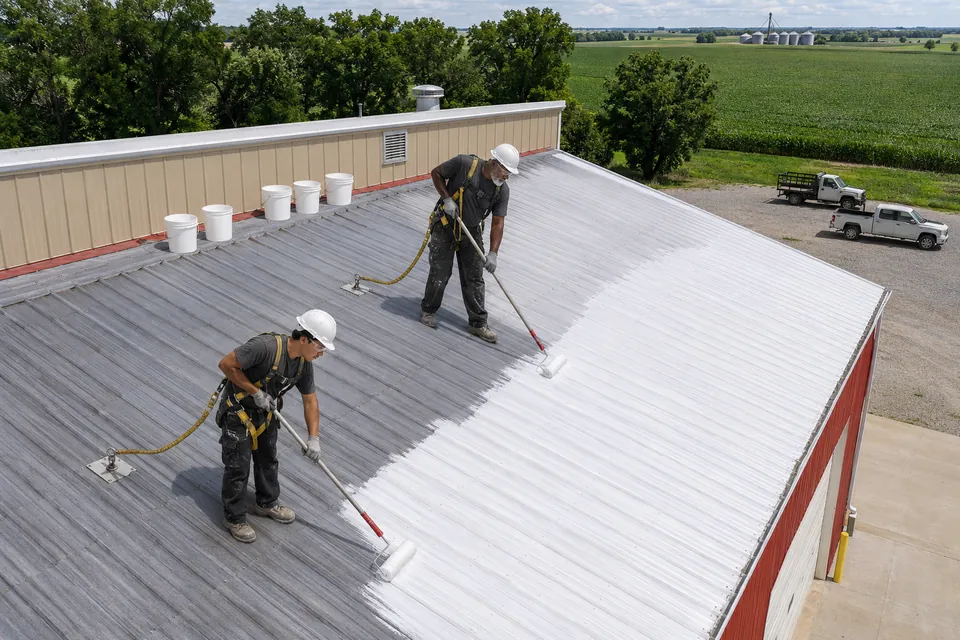
As a Columbus acrylic roof coating contractor, we restore sloped metal roofs on shops, plants, and warehouses with water-based coats applied in dry, warm weather.
Columbus acrylic roof coating works best on panels with enough slope to shed water fast. Pick the card that matches your roof.
Chalky paint washes off, and the bare factory finish below takes a rust primer where needed and two acrylic coats.
Ribbed panels that drain in minutes after rain make a strong match for acrylic, which costs less per gallon than silicone.
Leaking fasteners and side laps get sealed and covered with fabric first, then the acrylic coats tie them into the field.
Standing water softens acrylic films, so flat or ponding roofs are better served by silicone or by fixing the drainage first.
Acrylic covers well, but it needs a clean, sealed surface. These six conditions get handled before the first coat goes on.
Factory paint breaks down into a white powder that rubs off on your hand. Washing removes the chalk so the acrylic bonds to the panel finish instead of the loose film on top.
Water and dirt collect in the flat pans between ribs, and rust starts there first. Brushing back to firm metal and priming stops it before any coating covers the pans.
Screws back out as panels expand and contract each day. Tightening, replacing, and sealing each fastener head comes before acrylic covers the roof.
End laps near the eave take the most water and often show gaps. Sealant and fabric close each lap so it holds tight under the coating through freeze and thaw.
Brittle skylight panels crack from hail and age. Replacing them, or covering them with matching metal, closes a common leak point before coating starts.
Plant exhaust can leave oils and chemicals on panels around fans and stacks. Those areas get extra cleaning and a compatibility check, since some residues attack acrylic.
Acrylic is one of four systems we apply in Columbus. Here is how they compare on the roofs we see.
| System | Best On | Watch For | Recoat With |
|---|---|---|---|
| Acrylic | Sloped metal panels that drain fast | Ponding water and cold, damp cure days | Acrylic or silicone |
| Silicone | Low spots and flatter roofs | Dirt pickup and a slick surface | Silicone only |
| Spray foam with topcoat | Buildings needing added insulation | Dry substrate needed before spraying | Same topcoat type |
| Shingle coating | Intact steep-slope asphalt shingles | Curling, brittle, or missing shingles | Shingle-rated coating |
These pairs show what wears out on sloped metal roofs and what an acrylic coating does about each one.
Sun and weather wear the factory paint until bare steel starts to show through on the rib tops.
Two acrylic coats add a fresh, bright surface that reflects sunlight and shields the panel from rain and snowmelt.
Flat pans between ribs hold dirt and moisture that rust the steel from the top down.
Primer at the rusted spots and a continuous acrylic film keep water off the treated metal from eave to ridge.
Faded metal absorbs summer sunlight and passes that heat to the space below the roof.
A white acrylic finish reflects much of that light, which can reduce heat gain through the roof on shops and plants.
Some systems need special primers or full removal once they wear thin.
Acrylic recoats with a cleaning and a fresh coat, so upkeep stays simple and the panels stay covered over the years.
Water coming in during storms? Call us and describe where it shows up inside the building.
Call UsHave your roof size handy? Get a planning range for acrylic coating on your panels.
Get Free Ballpark EstimateAcrylic is water-based, so the forecast shapes the schedule. These five steps run in order on every acrylic job.
We walk every panel run, checking screws, laps, rust, skylights, and gutters. A moisture meter marks any wet insulation that needs replacing before the coating plan is set.
Pressure washing takes off chalky paint, dirt, and exhaust film. Panels dry fully before primer or sealant goes on, since acrylic needs a clean face to bond.
Rusted spots get primer, and screws, laps, and curbs get sealant with fabric. These details cure before the first acrylic coat is rolled or sprayed.
Acrylic needs dry hours and temperatures above its label minimum to cure. Coats go on only when the forecast gives that window, and rain days push the schedule.
A base coat and a top coat build the thickness the manufacturer specifies. Each coat cures before the next one goes on, and wet film gauges confirm the build.
Acrylic covers sloped metal well. For flatter roofs, insulation needs, or shingle wings, these systems take over.
Full restoration of exposed-fastener panels, with screw sealing, rust primer, and the coating matched to the roof slope.
Columbus commercial metal roof coatingFlat sections and low spots that hold water after storms take silicone, which keeps its film under ponding.
Columbus silicone roof coatingFoam sprayed over the old roof adds insulation and covers every lap before a protective topcoat goes on.
Columbus spray foam roofingAsphalt shingle sections on offices or churches can get a coating built for shingles when they still lie flat.
Columbus shingle roof coating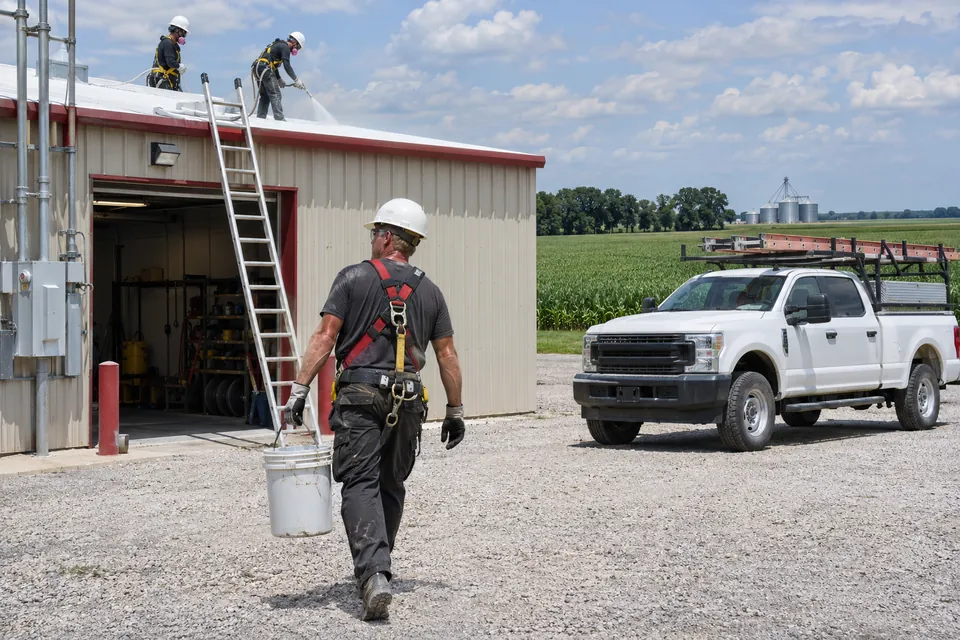
For planning, acrylic jobs in Columbus fall within roughly $2.50 to $4.00 a square foot. Because acrylic costs less per gallon than silicone, plain sloped roofs often price near the bottom. Rust primer, seam fabric, extra coats, and hard-to-reach roofs push it higher, while big roofs spread setup cost over more square feet.
The main drawbacks show up on flat roofs and roofs that drain poorly. Standing water softens acrylic and weakens its grip. Curing takes dry weather above the label temperature, which shortens the Columbus work season. The film also thins with weathering and needs recoats. On sloped metal panels that shed water, these issues shrink.
Its life on a Columbus metal roof comes down to film thickness, roof slope, and maintenance. Manufacturers often rate acrylic systems at the specified thickness for around a decade or longer. Clean, fast-draining panels help it last, while ponding, foot traffic, and hail wear it faster. Recoating before the film is gone renews the roof without a restart.
Yes, when the plant's panels have enough pitch to drain fast. Acrylic reflects sunlight and can trim heat gain through the roof. Exhaust that carries oils or chemicals calls for a compatibility check, because certain residues break acrylic down. Rusted panels get primer and seams get sealed before the acrylic coats go on.
Hail and winter wear show up first at seams, screws, and roof edges. Hailstones dent panels and nick the coating on rib tops. Snow and ice linger in gutters and valleys and push water into any gap. A check after big storms and every spring, with spot repairs in matching coating, keeps small damage small.
Tell us about the slope, the screws, and the rust. We will walk the panels and plan the acrylic coats.