Packed Chaff In The Ribs
Chaff and dust settle in the panel ribs and hold moisture against the paint for days after rain. Under that packing, the steel rusts faster than the open areas nearby.

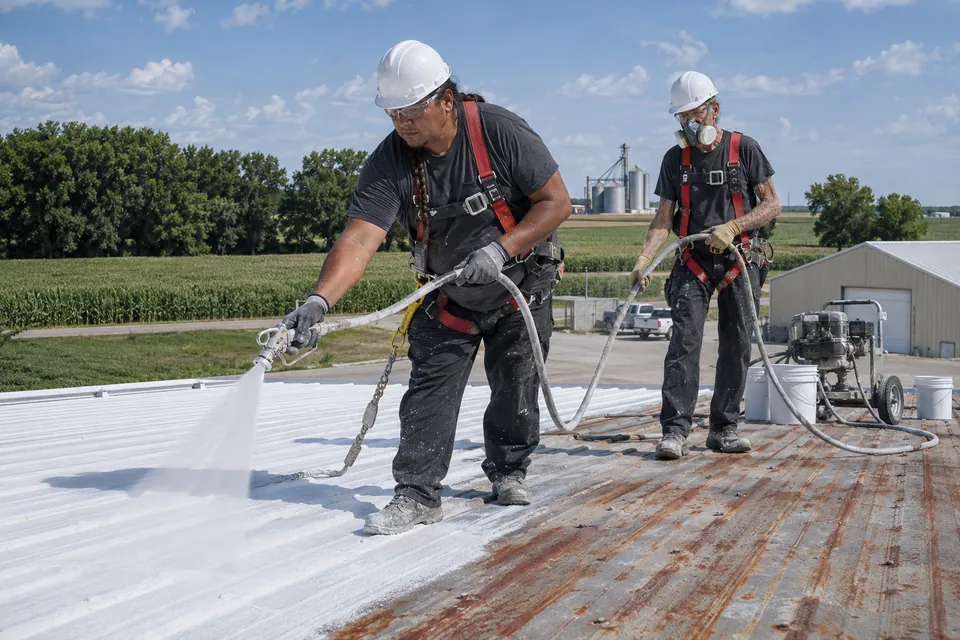
As a Fullerton metal roof coating contractor, we wash grain and equipment building roofs clean, let them dry fully, and check the bare steel before coating.
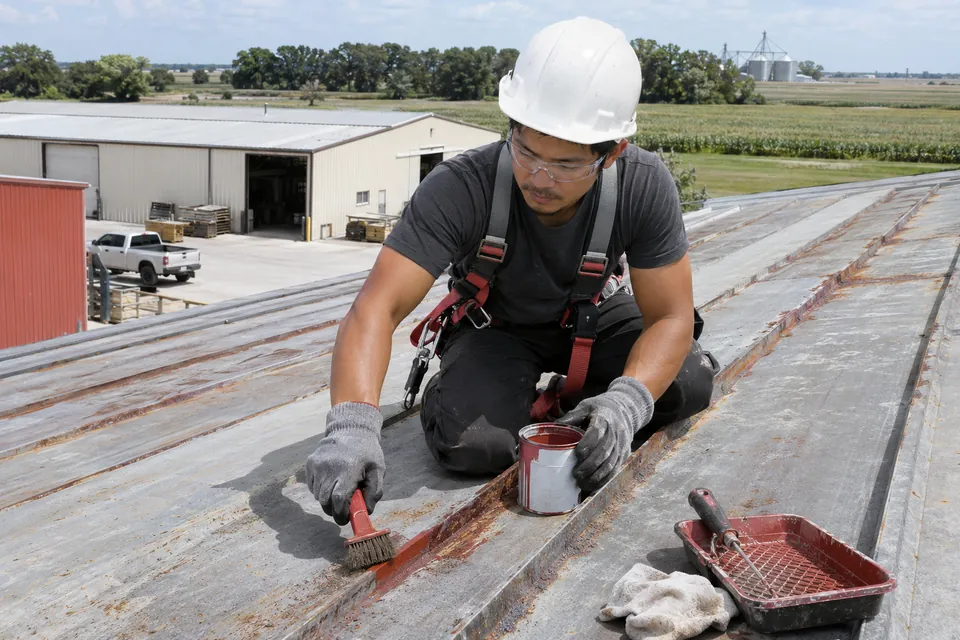
Fullerton metal roof coating on grain and equipment buildings rests on one step more than any other: getting the panels truly clean.
Roofs near grain handling collect fine dust, chaff, bird droppings, and diesel or oil film from equipment. Primers and coatings grip whatever is on the surface, so a coating laid over that layer peels off with it. A wash that looks good from the ground still leaves residue in the ribs.
We pressure-wash every panel, rinse the ribs and laps, and give the roof time to dry completely. Only then does the rust check happen, because dirt hides pitting and thin spots. What we find on the clean steel decides the primer, the repairs, and the coating.
Grain and equipment roofs carry residue that hides wear. These six conditions show up once the panels are clean.
Chaff and dust settle in the panel ribs and hold moisture against the paint for days after rain. Under that packing, the steel rusts faster than the open areas nearby.
Exhaust from tractors and dryers leaves an oily film near vents and eaves. Coatings won't bond to it, so a degreasing wash comes before any primer.
Droppings are acidic and eat through the paint on ridge caps and gutters. Pitted steel there is cleaned to firm metal and primed, or replaced where it has gone thin.
Dust washes into the gutters and sets like mud, so water backs up onto the eaves. Gutters are cleared and flushed as part of the roof wash.
Dryers, fans, and augers shake the building, and screws along the purlins back out. Loose ones get tightened or replaced with larger fasteners before coating.
Ridge vents and closures fill with dust and stop breathing, which traps moisture under the panels. Closures are cleaned or replaced and the cap laps sealed.
Once the panels are clean, coating answers each kind of wear that grain and equipment buildings put on a metal roof.
Dust and chaff on bare paint keep the surface damp long after the rain ends.
A smooth coating sheds dust more easily and leaves fewer places for residue to settle, so the roof dries faster after each rain.
Bird droppings and damp dust wear the paint off ridge caps, gutters, and eaves first.
Primer on the treated steel plus extra coating at caps and eaves puts the thickest protection where the wear is heaviest.
Vibration from dryers and fans works fasteners loose and opens up their washers.
Replaced and snugged screws are detailed one by one, and the coating seals each head so vibration has less room to let water in.
Sun-faded panels absorb heat and wear thin over stored feed, grain, and equipment.
A light reflective topcoat sends sunlight back off the roof and adds a fresh protective layer over the old paint.
Three systems fit grain and equipment buildings. Slope, insulation needs, and how often people walk the roof shape the pick.
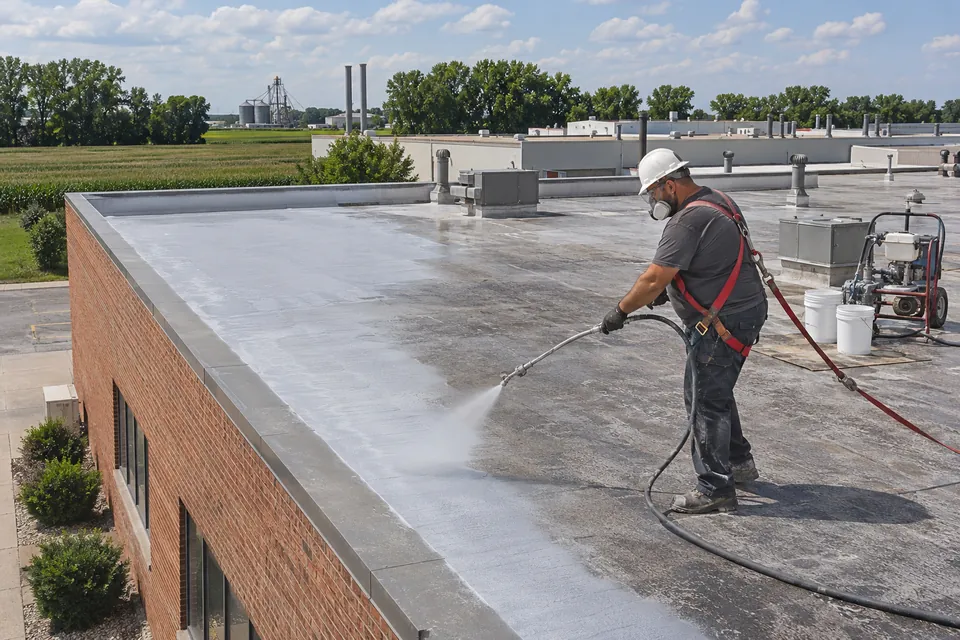
Silicone holds up where water sits on lower-pitch roofs and lean-tos. It collects dust, so a rinse every so often keeps the surface bright and reflective.
Silicone Roof Coating Details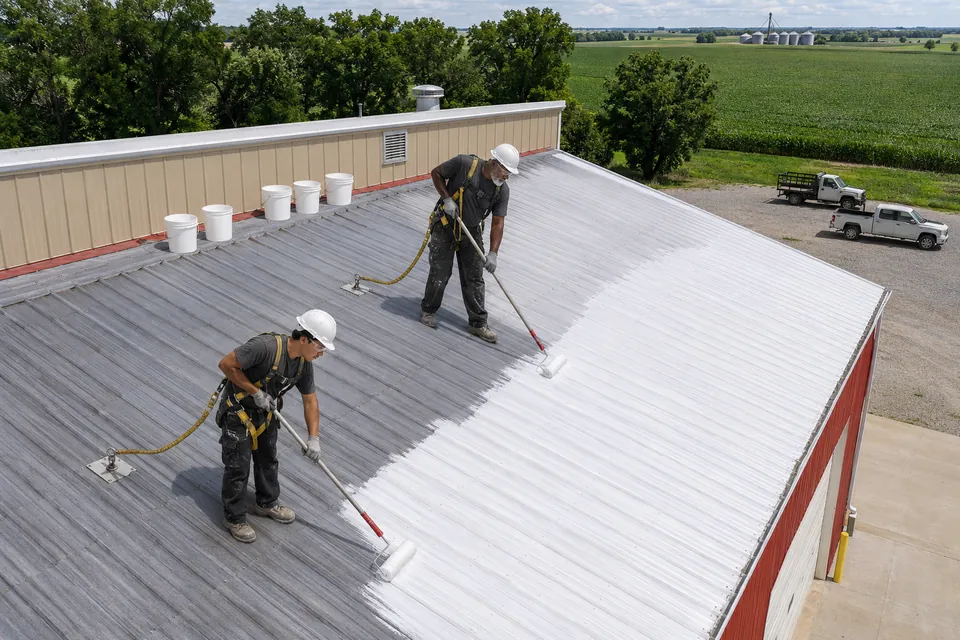
Steeper equipment sheds and storage buildings shed water fast, which suits acrylic. It recoats easily later and cures well in dry, mild weather.
Acrylic Roof Coating Details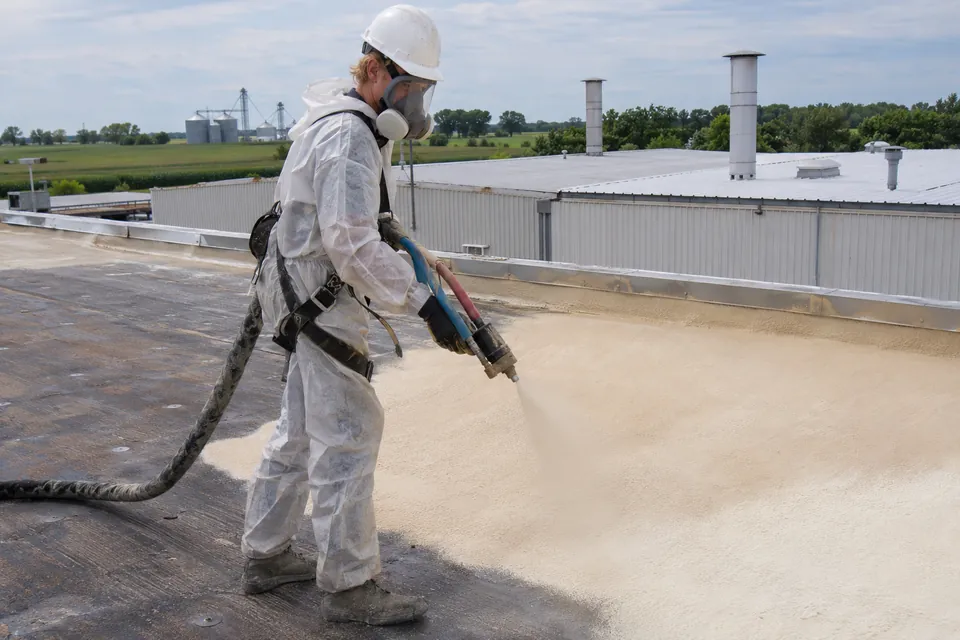
Heated shops with bare panels gain insulation and a sealed surface from spray foam. A topcoat protects the foam, and we keep overspray away from stored equipment.
Spray Foam Roofing DetailsCall and tell us where it lands. We track it to the screw, cap, or lap above.
Call UsGet a planning range for your grain or equipment roof before the wash and roof walk.
Get A Free Ballpark EstimateWashing sits early in this order for a reason: every later step needs clean, dry steel to work.
A first walk notes residue, vents, gutters, and obvious leaks, and we check the insulation from inside. The full rust grade waits until the roof has been washed.
Pressure washing clears dust and chaff, and a degreaser goes on near exhaust and vents. Ribs, laps, and gutters get a second rinse.
With the roof fully dry, rust gets graded panel by panel on bare steel. Thin or holed panels are marked for replacement.
Treated rust receives primer, loose screws are replaced, and laps, caps, and closures get sealed with fabric. Replacement panels go in at this stage.
Coating goes on at the specified thickness, heaviest at caps and eaves. A final walk with you confirms every area and leaves you photos.
We coat metal roofs in Fullerton plus four more nearby towns. If your building sits outside them, call us or send us a message.
Co-op and equipment buildings with long panel runs, where end laps get rebuilt before any coating.
Shop roofs with many openings, each skylight and vent curb flashed before coating.
Working stores and offices coated in sections while customers keep coming and going.
Shallow-pitch roofs where silicone covers bays that hold water after storms.
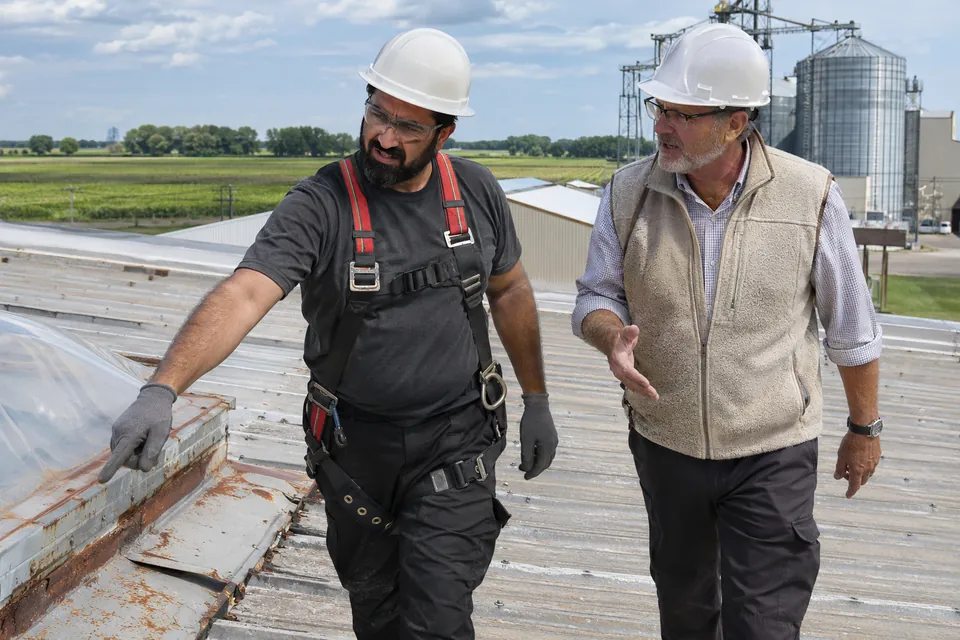
Call and tell us what the building stores and when the roof was last cleaned.
Call UsYes, every time. Dust, chaff, droppings, and oily film sit between the coating and the steel and break the bond. We pressure-wash all panels, rinse the ribs and laps, wait for the roof to dry completely, and only then look for rust on the clean metal. Cleaning, primer, and seam repairs are part of the coating price.
Fullerton metal roof coating cost sits in the planning range of about $2.50 to $4.00 per square foot. Heavy residue that needs degreasing, many loose screws, rusted caps, and extra coats push it higher. Panels that need replacing plan at about $5 to $8 per square foot for those sections.
It includes the roof walk, washing and degreasing, a full dry-out, rust grading and primer, screw and lap repairs, cleaned ridge closures and gutters, and photos at the end. Grain buildings, machine sheds, and shop buildings all follow that sequence.
Call and tell us what the building stores, its rough size, and where water shows inside. We arrange a roof walk at a time that avoids your busiest hauling days, then go over the wash, repairs, and coating choices with you.
Yes. The work happens on top of the roof with the panels left in place, so stored grain and equipment stay covered. We keep wash water and overspray away from open doors and vents, and plan around loading so trucks can still reach the building.
Rinse dust and chaff off the roof once or twice a year, focusing on ribs, gutters, and caps near vents. Clean coating reflects more sun and dries faster. During the rinse, look for cuts or bare spots and call us so they get touched up with matching coating.
Tell us what your building stores and how dusty the roof gets, and we will plan the wash, repairs, and coating.