If Your Roof
Laps And Screws Leak Across The Whole Roof
Foam covers every lap and fastener in one sprayed layer, so a roof with leaks everywhere gets sealed in a single pass.
Start WithSpray Foam Roofing

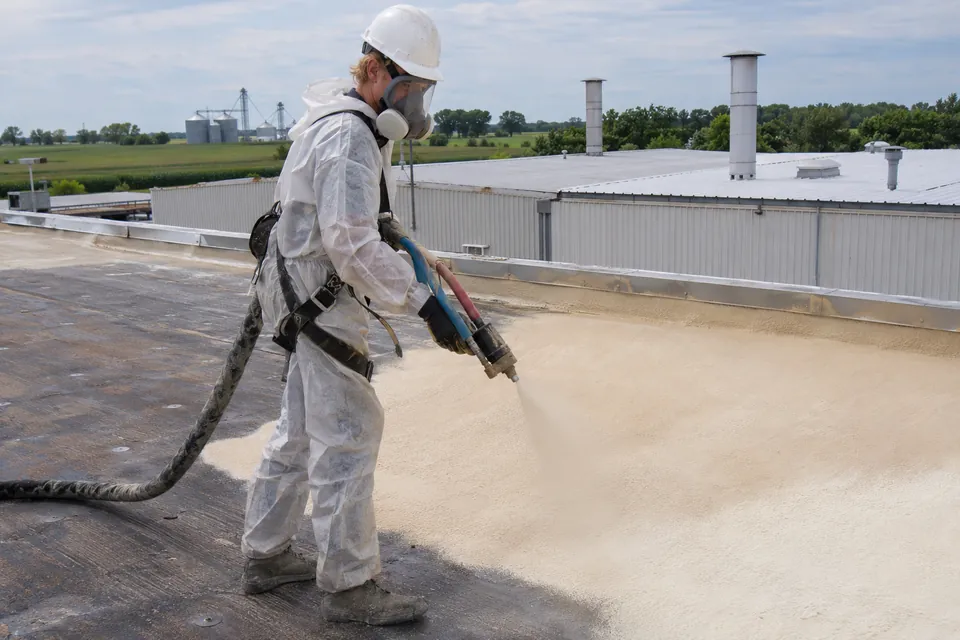
As a Columbus spray foam roofing contractor, we spray foam over dry metal and built-up roofs, then cover it with a silicone or acrylic topcoat.
Columbus spray foam roofing fits dry roofs where added insulation or many leaking laps make foam the practical cover. Match your roof below.
Foam covers every lap and fastener in one sprayed layer, so a roof with leaks everywhere gets sealed in a single pass.
Each inch of foam adds insulation value on top of the old roof, which helps plants and shops hold temperature.
Extra foam thickness in low areas builds slope toward the drains before the topcoat goes on.
Wet insulation and a damaged deck must come out first, so those sections need tear-off and repair before any foam.
Foam bonds only to a clean, dry, firm surface. These six conditions get fixed before any spraying starts.
Water in the old insulation turns to vapor under foam and lifts it in blisters. Core cuts and a moisture meter find those spots so they come out first.
Panels that flex underfoot crack the foam above them. Loose screws are tightened or replaced and loose panels fastened down before spraying starts on that bay.
Flaking scale gives foam nothing firm to grip. Wire brushing and primer bring rusted panels back to a surface the foam can bond to across the whole roof.
Foam raises the roof surface, so drains, scuppers, and edge metal get adjusted to keep water flowing off. Each one is detailed by hand around the opening.
Overspray drifts into rooftop unit intakes and onto nearby cars. Intakes are covered, units shut off where needed, and wind speed checked before spraying.
Pipes, curbs, and conduit legs all need foam built up around them. Each opening gets a tapered foam detail so water runs away from it toward a drain.
Spray foam is the thickest system we apply. Here is how it compares with the coatings we use on Columbus roofs.
| System | Best On | Watch For | Recoat With |
|---|---|---|---|
| Spray foam with topcoat | Leaky roofs needing insulation | Dry substrate and calm wind for spraying | Same topcoat type |
| Silicone | Low-slope roofs with ponding water | Dirt pickup and slick when wet | Silicone only |
| Acrylic | Sloped metal panels that drain fast | Dry, warm weather to cure | Acrylic or silicone |
| Shingle coating | Intact asphalt shingle sections | Curling or brittle shingles | Shingle-rated coating |
Foam plus a topcoat changes how an old roof wears. Each pair shows a failure and what the foam system does about it.
Older metal roofs have laps and screws by the thousand, and each one can open with age.
One sprayed foam layer covers every lap and fastener, leaving a single surface with no joints to fail.
Thin or wet insulation lets heat out in winter and in during summer.
Each inch of foam adds insulation on top of the old roof, and the white topcoat reflects summer sun off the building.
Removing an old roof fills dumpsters and opens the building to weather while the deck sits bare.
Foam goes over a dry existing roof, so the old roof stays as the base and work continues inside below.
Hail and foot traffic scuff the topcoat on busy roof areas near units and hatches.
Foam damage is cut out and refilled, then recoated, so repairs stay local and simple.
Leak showing up during storms? Call us and describe where the water lands inside.
Call UsKnow the roof size? Get a planning range for spray foam roofing on your building.
Get A Free Ballpark EstimateFoam work depends on dry surfaces and calm air. These five steps run in order, with the topcoat following the foam.
A roof walk and moisture survey map wet insulation, loose panels, drains, and every curb. Wet sections are marked for removal before any foam goes down.
Pressure washing and a dry-out ready the surface. Air intakes, windows, and parked equipment get covered so overspray stays on the roof.
Foam goes on in passes to the planned thickness, with extra build at low spots to move water toward drains. Thickness is checked as each area is finished.
Silicone or acrylic topcoat covers the foam to shield it from sunlight, which breaks foam down. Granules can be added along walkways for footing.
Inspections twice a year catch worn or punctured topcoat early. When the film wears thin, cleaning and a fresh topcoat renew the roof without new foam.
Some roofs need no foam at all. When a coating alone will do, or a building has a shingle section, these systems cover it.
Metal roofs with solid insulation and a few leaking laps can skip foam and get sealed details and a coating.
Columbus commercial metal roof coatingSilicone works as the topcoat over foam and as a standalone coat on low-slope roofs that hold water.
Columbus silicone roof coatingAcrylic topcoats suit sloped foam roofs, and acrylic alone fits sloped metal panels that drain fast.
Columbus acrylic roof coatingOffice or church wings with asphalt shingles get a coating rated for shingles instead of foam.
Columbus shingle roof coating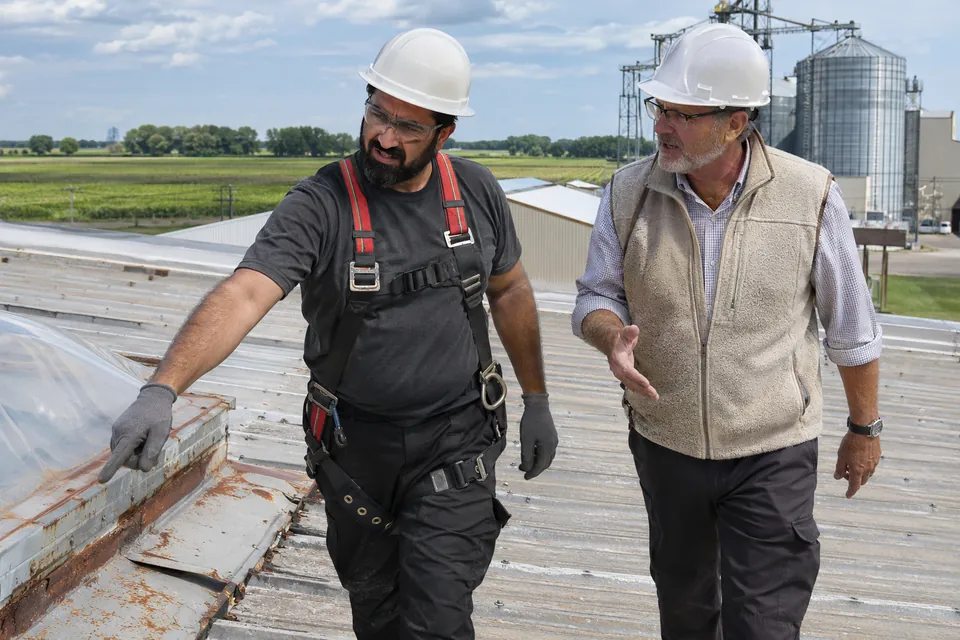
Call and tell us about leaks, insulation, and the roof surface today.
Call UsFoam roofs in Columbus are priced per square foot, and foam thickness causes most of the spread. Every added inch brings more material and more insulation. Topcoat choice, prep, and wet insulation removal change it too. As planning figures, coating sits near $2.50 to $4.00 a square foot, while replacement sits near $5 to $8.
Yes. Sprayed foam seals a leaking warehouse metal roof by covering each seam and screw under one continuous layer. It grips clean, dry metal and fills the gaps at laps. Wet insulation has to come out first, or the trapped water causes fresh trouble. A silicone or acrylic topcoat then shields the foam from sunlight.
It lasts as long as its topcoat stays in good condition. Sunlight degrades bare foam, so the topcoat carries the protection. Manufacturers describe foam roofs as renewable with recoats instead of replacement. Fix hail punctures and foot traffic damage promptly, and inspect the roof twice a year to spot worn coating early.
Recoat when the topcoat thins, cracks, or lets foam show through. Exposed foam turns tan or brown and feels chalky to the touch. Manufacturers set recoat intervals by coating thickness. The roof gets cleaned, damaged foam gets cut out and filled, and a new topcoat goes on. Staying on schedule heads off bigger foam repairs.
In most cases, yes, as long as the existing metal or built-up roof is dry and structurally firm. We look for wet insulation, loose panels, and deck damage first. Foam then adds insulation and seals the old surface. Drains, edges, and equipment curbs get detailed so water keeps running off the roof.
Spray foam works around rooftop units once each curb is checked and the unit's air intake is covered during spraying. Foam is built up and tapered at every curb so water moves away from it. Units can stay in service between spraying passes, and technicians get a marked walkway in the topcoat to their equipment.
Tell us how the roof leaks and how the building holds heat. We will check the surface and plan the foam work.